

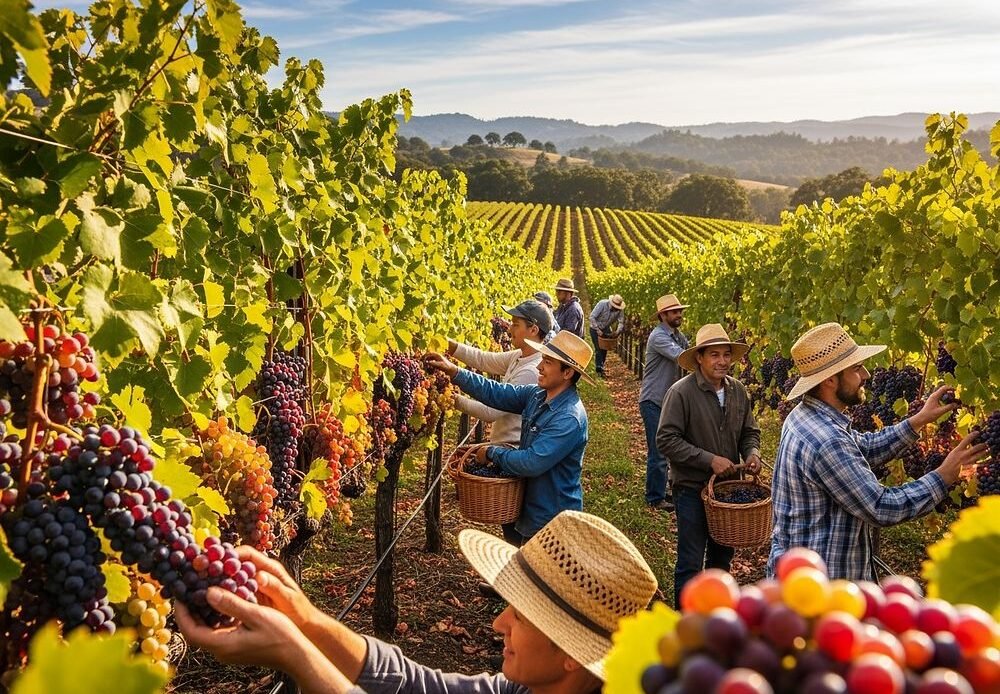
When most people start talking about great wine, they almost always point to the same usual spots—the sun-drenched hills of Tuscany, the stately châteaux of Bordeaux, or the neat, orderly valleys of Napa.
Yet long before France planted its first vineyard or Italy poured its first glass, a small country tucked between the Black Sea and the soaring Caucasus Mountains was already making wine. In fact, people there had been doing it for thousands of years.
Welcome to Georgia—the place where winemaking actually began.
Archaeologists digging through ancient settlements in the region found large clay jars containing traces of wine that dated all the way back to 6000 BCE. That means Georgians have been making wine continuously for roughly 8,000 years. Yet, despite this wild head start, Georgia remains one of those rare places that somehow hasn’t been completely overrun by mass tourism.
If you’re looking to get off the worn-out travel trail and drink something with actual history behind it, here is why Georgia’s ancient wine culture belongs on your radar.
The Clay Jar Underground
What makes Georgian wine feel so different isn’t just how long they’ve been doing it. It’s how they still do it today.
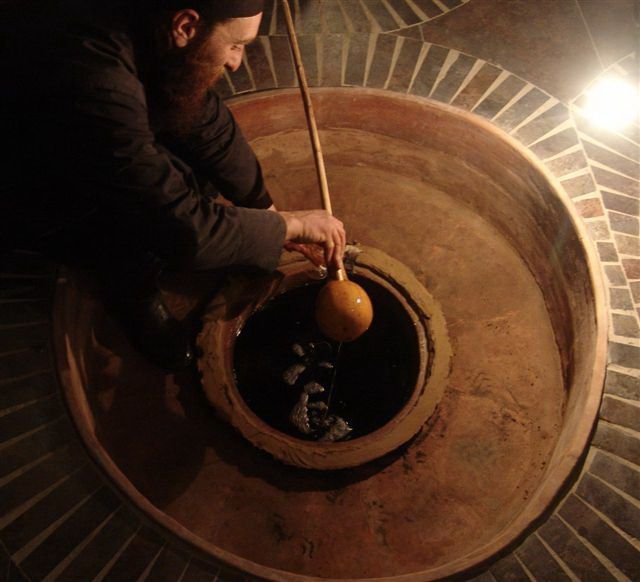
While winemakers in Western Europe and the US rely on oak barrels or shiny stainless steel tanks, local Georgian families have spent centuries using something called a Qvevri (pronounced k-way-vree). These are massive, egg-shaped clay pots lined with beeswax and buried completely underground up to their necks.
By burying the pots, the earth naturally keeps the fermenting grapes at a cool, stable temperature without needing modern refrigeration.
Instead of carefully separating the grapes right away, traditional Georgian winemakers dump everything into the Qvevri together—juice, skins, seeds, and stems. The whole mixture seals up and sits underground for months. By letting the liquid hang out with the skins for so long, the wine picks up rich, earthy flavors, deep colors, and a dry, structured texture you won’t taste anywhere else in the world.
Forget White Wine—Try Amber
If you’ve seen “orange” or “amber” wines showing up on trendy wine bar menus over the last couple of years, you have Georgia to thank.
When white grapes like Georgia’s native Rkatsiteli sit in a Qvevri with their skins on for months, the juice turns a striking, deep amber color.
Drinking it is a bit of a trip for your senses. It looks like liquid topaz, smells like dried apricots or roasted nuts, has the crispness of a white wine, but feels like a full-bodied red in your mouth.
If you prefer dark reds, the local Saperavi grape is just as memorable. It’s one of those rare grapes where both the skin and the inner fruit are dark red, producing a deep, ink-colored wine packed with flavors of dark berries, leather, and spice.
Life in the Eastern Valleys
While you can find wine all over Georgia, the eastern region of Kakheti is where the heart of it all beats loudest.
Framed by the snow-topped peaks of the Greater Caucasus, Kakheti is covered in sweeping valleys, centuries-old stone monasteries, and endless rows of vines.
Out here, wine isn’t just an industry or a hobby; it’s practically a family member. Almost every rural home has its own dirt-floor cellar (called a marani), where families make their own house wine every autumn to share with anyone who stops by.
If you head out to Kakheti, you’ll likely spend your time between two main hubs:
- Sighnaghi: A tiny, picturesque 18th-century town perched high on a hill overlooking the Alazani Valley, full of cobbled streets and red-tiled roofs.
- Telavi: The bustling central town of the region, packed with local markets, historical sites, and family-run wineries where you can taste straight out of the ground.
The Feast That Never Ends
You can’t really separate Georgian wine from Georgian food. They’re baked into the exact same culture.
In Georgia, there is a deep-seated belief that a guest is a literal gift from God. That philosophy comes to life during a Supra—a traditional, multi-hour Georgian feast.
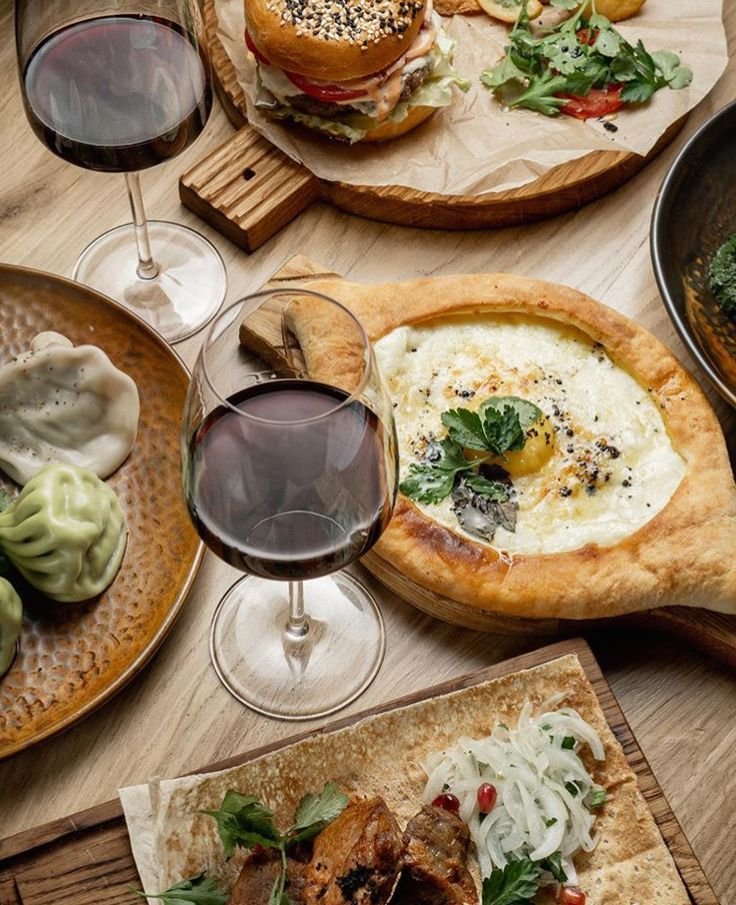
A Supra is led by a toastmaster called a Tamada, who guides everyone through the evening with emotional, poetic, and often hilarious toasts about family, life, peace, and old friends.
Meanwhile, the table practically groans under plates of incredible comfort food:
- Khachapuri: A warm, bread boat filled with melted cheese, butter, and a soft egg yolk.
- Khinkali: Oversized, twisted dumplings filled with spiced meat and hot broth (which you eat with your hands, drinking the broth first).
- Badrijani Nigvzit: Pan-fried slices of eggplant rolled around a rich garlic-walnut paste and topped with pomegranate seeds.
Between every toast, glasses are drained, songs are sung, and by the end of the night, you feel like you’ve known the people at your table for years.
Why You Should Go Now
As travel gets more corporate and standardized everywhere else, Georgia still feels delightfully real. It offers incredible mountain scenery, incredibly warm people, and a living food and wine culture that hasn’t changed its core recipe in eight millennia.
It won’t stay a quiet secret forever—so if you want to experience wine culture at its absolute roots, now is the time to pack a bag.