
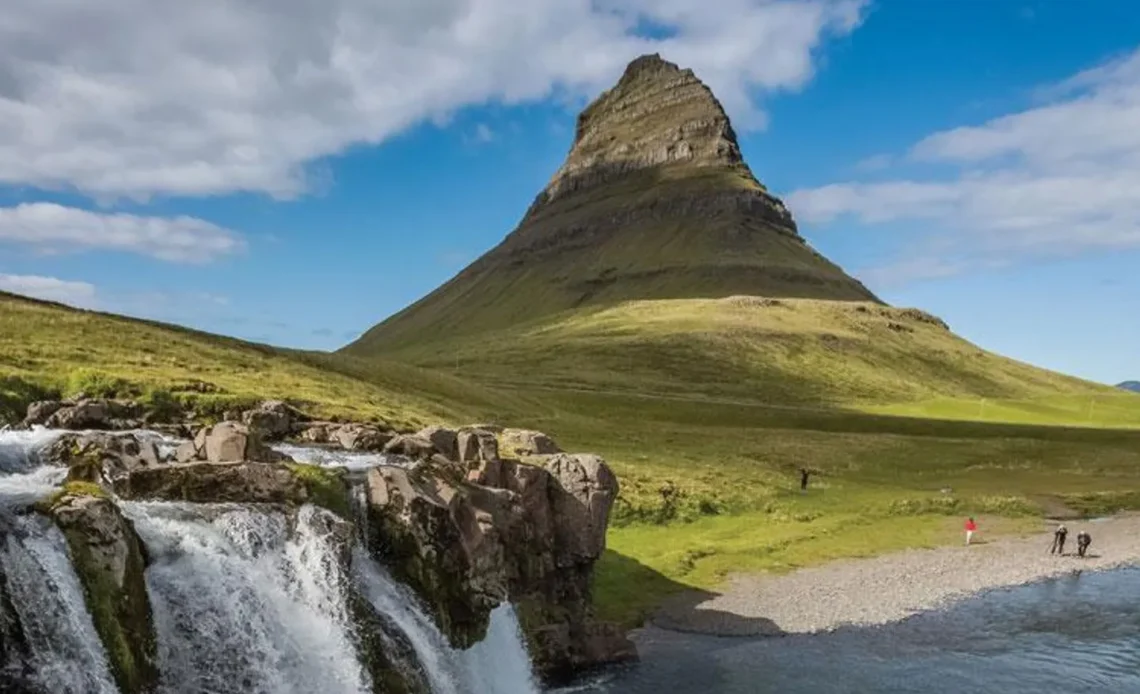
There are places that feel alive—not just scenically beautiful, but breathing, shifting, whispering. Northern Iceland is one of those places. It sits far from the usual tourist pathways, a region shaped by fire, carved by ice, and softened by communities who have learned to live in harmony with nature’s unpredictability. Traveling here feels less like sightseeing and more like being invited into an ancient conversation between land and sky.
My journey began in Akureyri, often called the “Capital of the North.” Unlike Reykjavík’s bustling energy, Akureyri moves gently, wrapped in fjord mist and framed by snow-dusted peaks. Colorful houses line its quiet streets, and a small botanical garden blooms defiantly against the Arctic climate. Early in the morning, I watched the harbor wake up—boats gliding across glassy water, seabirds circling overhead, and the town slowly stretching into the day. It felt like an introduction whispered rather than shouted.
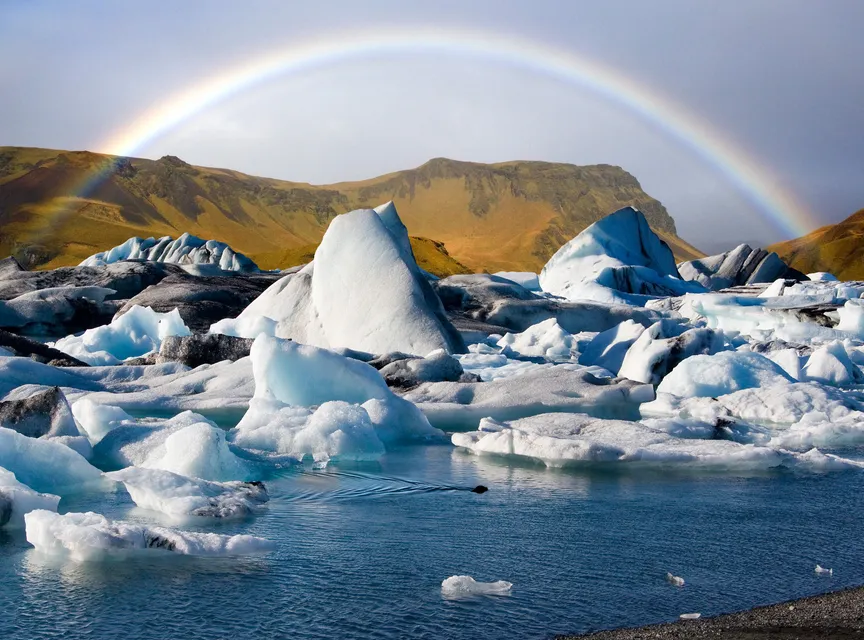
From there, I drove east toward the volcanic landscapes that define the region. Within an hour, the scenery transformed dramatically—rolling green hills giving way to stretches of black lava fields, steaming fumaroles, and cratered earth. My first stop was Goðafoss, the “Waterfall of the Gods.” The name alone sets high expectations, but the sight exceeded every one. Water surged in a perfect semicircle, tumbling over basalt cliffs into swirling blue pools. The mist carried a faint chill, and when a rainbow arched across the falls, it felt almost unreal—like stepping inside a myth.
Continuing along the Diamond Circle, I reached Lake Mývatn, a geothermal wonderland unlike anywhere else I’ve ever been. The lake shimmered silver under the shifting clouds, surrounded by lava formations that looked sculpted by giants. I explored the Dimmuborgir lava fields, where towering volcanic shapes rise like ancient fortresses. Legends say these formations were once the homes of trolls, and wandering through the labyrinth of rocks, it was easy to see why. The air smelled faintly of moss and minerals, and every path revealed a new surreal silhouette.
But the true heartbeat of Mývatn lies in its geothermal fields. At Hverir, boiling mud pots bubbled and hissed beside steaming orange earth. The landscape felt otherworldly—Mars-like, raw, and utterly captivating. The ground rumbled softly beneath my feet, as if reminding me that Iceland is constantly being remade from within. Standing there, surrounded by pillars of steam rising into a cold blue sky, I felt both small and completely connected to the wildness around me.
That evening, I soaked in the Mývatn Nature Baths, a quieter, less crowded alternative to the Blue Lagoon. The milky geothermal water wrapped me in warmth as the wind brushed across my face. From the pool’s edge, the volcanoes and lava fields stretched out like a sleeping dragon, and when the sky turned shades of lavender and rose, the entire landscape glowed with a soft, ethereal light. It was one of those rare moments when time seems to pause.
The next day, I ventured farther into the highlands toward Dettifoss, Europe’s most powerful waterfall. The roar reached me long before the falls came into view. When I finally stood at the edge, the sheer force of the water was staggering—gray, thunderous, relentless. Mist blasted upward like rain, soaking my jacket and hair, but I didn’t mind. Dettifoss wasn’t just a waterfall; it was an experience of nature’s raw, unfiltered strength.
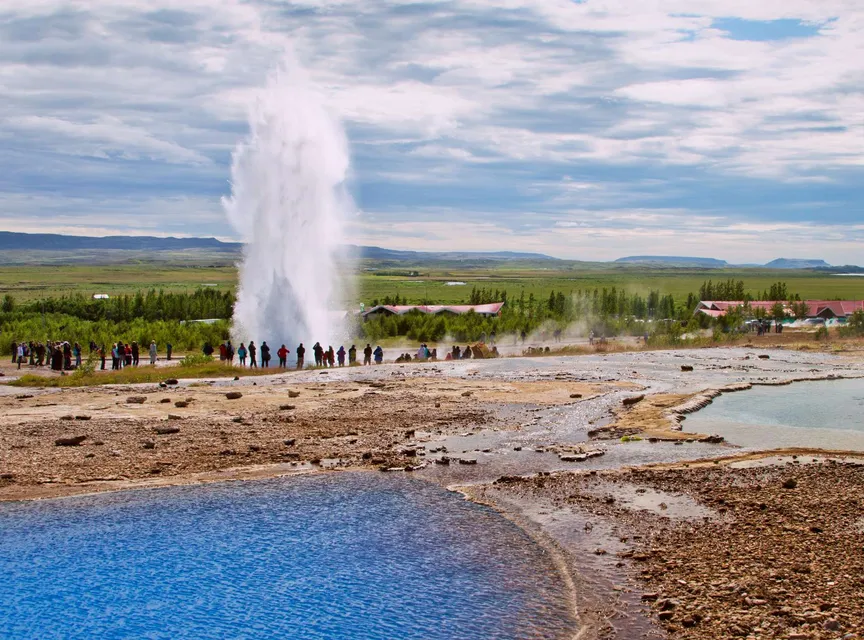
Heading north again, the landscape changed once more—becoming gentler as I reached the fishing village of Húsavík, known for some of the best whale watching in the world. I boarded a small wooden boat, bundled in a thick suit to guard against the Arctic wind. For a while, the sea seemed calm and endless. Then suddenly, a humpback whale surfaced, its massive form breaking the water with quiet grace before diving again in a smooth arc. Later, a pod of white-beaked dolphins danced alongside the boat, leaping playfully through the waves. The entire experience felt poetic, peaceful, deeply humbling.
As I returned to Akureyri on my final evening, the northern sky stretched overhead, glowing with soft midnight hues. The air smelled like salt, pine, and possibility.
Northern Iceland doesn’t overwhelm you—it transforms you. It teaches you to listen to the Earth’s quiet rhythms, to respect its moods, and to embrace beauty that is wild, volcanic, ancient, and alive. And when you leave, a part of you stays behind, carried by the wind across lava fields and fjord waters.