

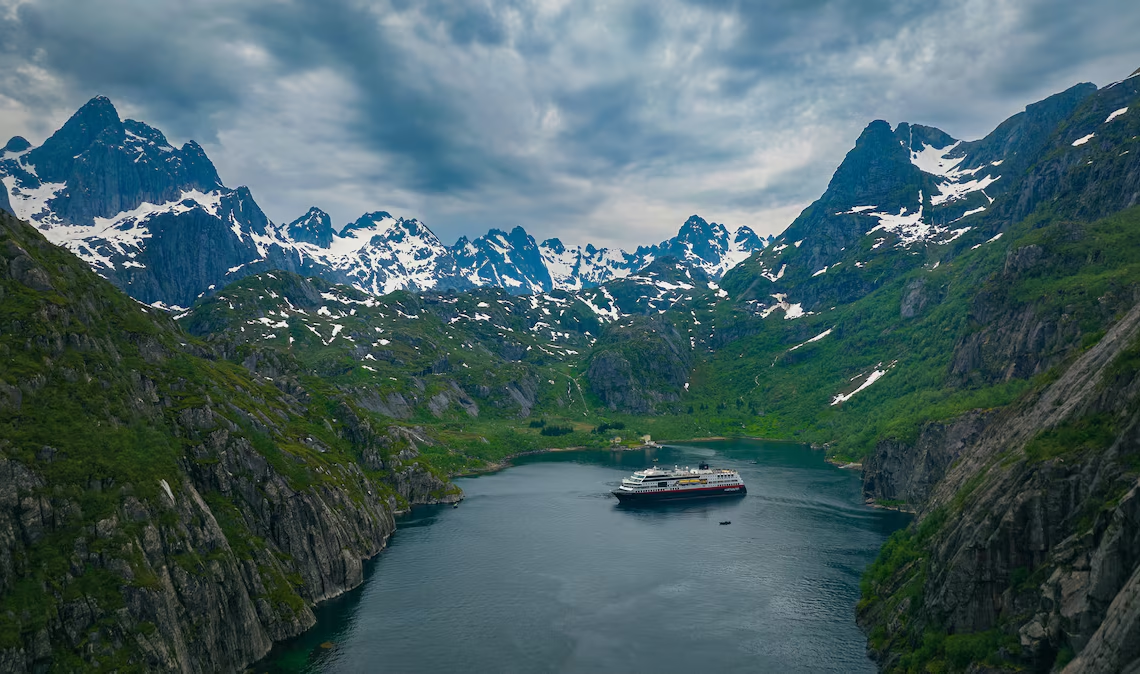
Some destinations beg to be rushed through—ticked off, photographed, and left behind. Norway’s remote fjords demand the opposite. They whisper, Slow down. Look closer. And once you surrender to that rhythm, the landscape opens up like a quiet revelation. This journey wasn’t about bucket lists or adrenaline—it was about drifting through a world shaped by water, wind, and time itself.
Arrival in Ålesund: The Gateway to Another Pace of Life
My adventure began in Ålesund, the Art Nouveau town that somehow looks as if a fairy tale architect sketched it into existence. Curved rooftops, pastel facades, and whimsical towers set against a backdrop of mountains create a scene that feels too perfect to be real.
But the real magic lies beyond the harbor.
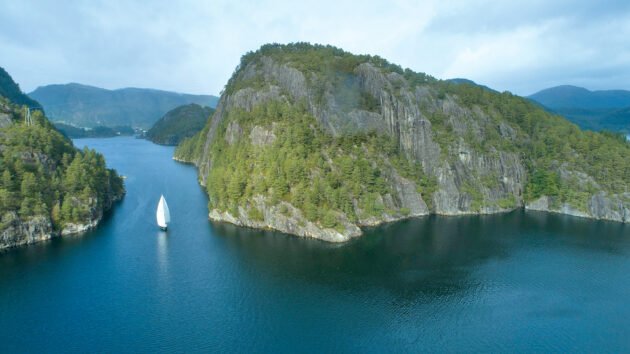
I boarded a small coastal ferry—not a cruise ship, not a tour boat, but the kind locals use to hop between islands. As we pulled away from the port, the world fell quieter. The ocean stretched calmly, and the jagged silhouettes of the fjords grew larger, darker, more dramatic. It felt like entering a world that exists parallel to ours, untouched by hurry.
Storfjord: Water Like Glass
Storfjord was my first taste of slow nature. The water was so still that the reflections of mountains looked sharper than the mountains themselves. Every ripple felt like a secret signal from the earth.
I stayed in a tiny fjord-side cabin run by a couple who lived entirely off the land—growing vegetables in raised wooden beds, fishing in the mornings, and heating their home with a stove that crackled gently through the night. Breakfast was warm rye bread, smoked salmon, and cloudberry jam served with a view that was impossible to describe without diluting its magic.
Walking the shoreline at dusk, I heard only the hush of the wind through pines and the soft tapping of water against mossy rocks. It struck me that beauty doesn’t always shout. Sometimes, it simply exists and waits for you to arrive.
Sunnylvsfjord: The Road That Follows the Water
The next leg of my journey was by bus—a single-lane route carved into the mountainside, hugging the fjord so closely that the water seemed to breathe beside us. The road twisted gently, leading to villages so small that the concept of “crowds” felt foreign.
In Hellesylt, I stepped off the bus to find a waterfall raging through the center of town, as if someone had dropped a piece of Iceland into Norway. But just minutes away, silence returned. A gravel path led from the water’s edge up into the woods, where I walked alone under a canopy of emerald moss and filtered sunlight.
This was a place where time felt layered—ancient geology mingling with wooden houses painted in deep reds and whites.
Geirangerfjord: Famous, Yet Quiet in the Right Moments
Geirangerfjord is arguably Norway’s most iconic fjord, but I discovered a trick: arrive at sunrise. While most travelers are still asleep, the fjord glows like a living painting—soft golds, pale blues, and smoky mist curling between the peaks.
I hiked to Ørnesvingen, the Eagle’s Bend viewpoint. The climb was steep, but every switchback revealed something more surreal: mirror-like water, waterfall ribbons cascading down vertical cliffs, and tiny farms perched impossibly high, relics of a time when people built homes wherever they could survive.
Sitting there, legs dangling over ancient stone, I felt something shift in me. Not an epiphany—just a gentle grounding. When landscapes are this vast and quiet, you can hear yourself again.
Hjørundfjord: The Fjord That Locals Keep to Themselves
My final stop was Hjørundfjord, a lesser-known gem embraced by the Sunnmøre Alps. The mountains here are sharper, the air cooler, the villages fewer. It feels like a fjord for those who want no distractions—not even mild ones.
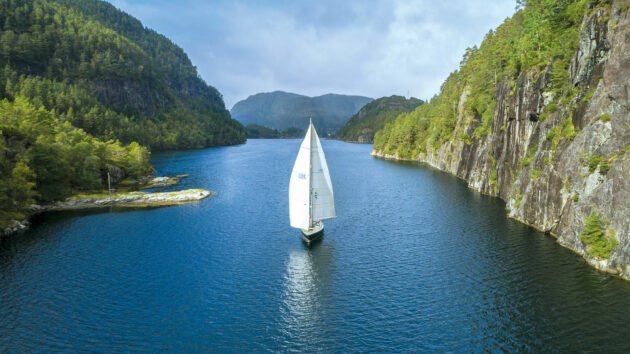
I kayaked across the glassy water one afternoon. Each stroke echoed, then dissolved into the quiet. I watched goats graze on steep pastures, saw waterfalls tucked into folds of rock, and felt more at peace than I had in years.
The Art of Slow Fjord Travel
Norway teaches you that spectacular doesn’t have to be dramatic, and adventure doesn’t have to be fast. Sometimes the most memorable journeys are the ones that whisper rather than roar—where you feel the landscape instead of conquering it.