

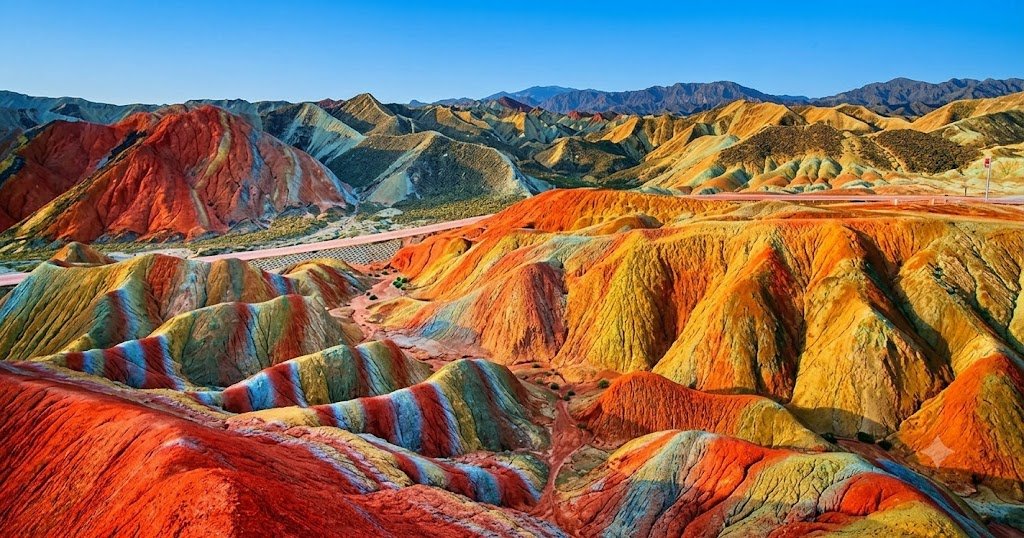
At first glance, the hills look as though someone has taken a paintbrush to the desert. Bands of red, mustard yellow, pale green and rust stretch across rounded ridges, creating a landscape so unusual that it is easy to mistake photographs of it for digital artwork. Yet the colours are real, and they have been millions of years in the making.
Welcome to the Rainbow Mountains of Zhangye, in China’s northwestern Gansu province. Officially part of Zhangye National Geopark, this extraordinary landscape is one of those places that deserves a spot on a travel wish list simply because it looks unlike almost anywhere else on Earth.
But the real pleasure of visiting Zhangye is not just seeing the famous striped hills. It is discovering a quieter side of China, where long desert roads, historic Silk Road towns and vast open landscapes make the journey as memorable as the destination.
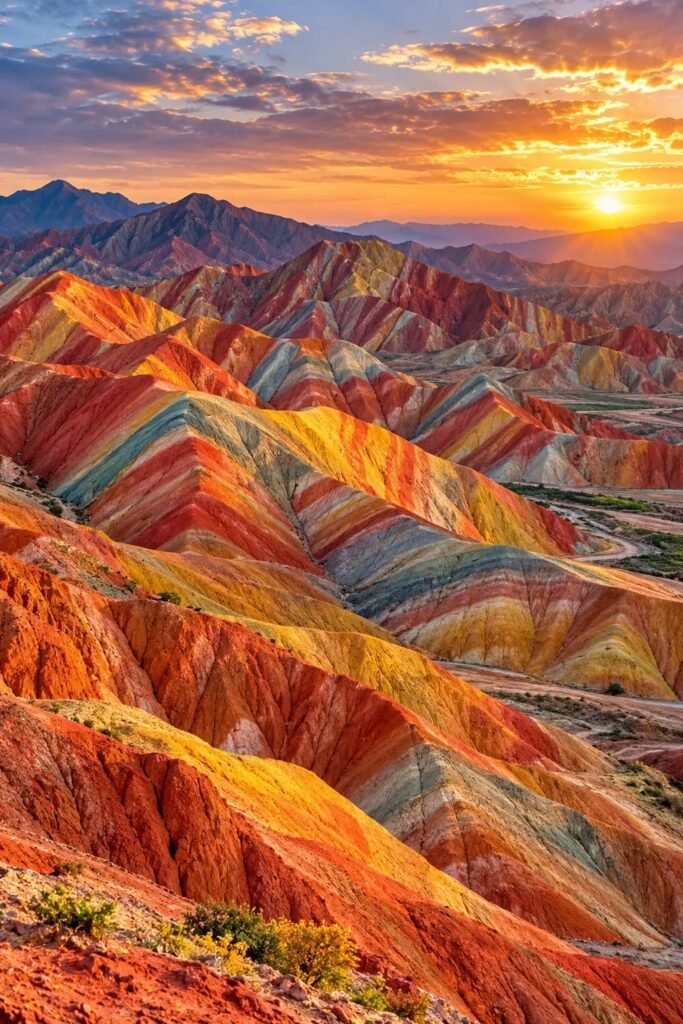
How Did the Mountains Get Their Colours?
The story begins millions of years ago, when layers of sand, mud and other sediments accumulated in the region. Over time, these deposits hardened into sedimentary rock. Different minerals within the layers produced different colours, while tectonic movements lifted and folded the rock formations. Wind and water gradually eroded the exposed surfaces, revealing the remarkable bands visible today.
Iron-bearing minerals play an important role in the reddish and rusty tones, while other mineral compositions contribute to the yellow, grey-green and darker bands. The result is a geological landscape that looks almost painted, although every stripe is part of the rock itself.
The formations belong to the region’s distinctive Danxia and colourful-hill landscapes. The Zhangye geopark covers a substantial area and contains several different geological features, so the scenery extends beyond the famous rainbow-coloured ridges.
What Is It Like to Visit?
The first thing to know is that the Rainbow Mountains are not a single viewpoint beside the road. The main scenic area has designated viewing platforms connected by visitor routes, allowing travellers to see the landscape from different angles.
At one viewpoint, the hills appear as broad, gently rolling bands. From another, the ridges rise and fall in tighter formations, revealing layers that look almost like folded fabric. Walking between viewpoints gives you time to appreciate how much the colours and shapes change across the landscape.
Bring a camera, naturally, but do not spend the entire visit looking through its screen. The scale can be difficult to appreciate in photographs. Standing above the ridges, watching the colours stretch towards the horizon, is a different experience altogether.
The scenery also changes with the light. Early morning can bring softer tones and longer shadows, while late afternoon often gives the warmer colours greater depth. On clear days, the contrast between the colourful hills and the blue sky is particularly striking. Recent rain may deepen the appearance of some colours, although weather conditions vary.
The Best Time to Plan Your Trip
For many visitors, the period from June to September is a practical time to explore Zhangye, when warmer weather generally makes sightseeing easier. Summer can also bring strong sunlight, so sunglasses, sunscreen, a hat and drinking water are sensible essentials. <Cite refs={[“turn701034search15”]}/>
Spring and autumn can appeal to travellers who prefer milder temperatures, but conditions may be windy or changeable. If photography matters to you, consider visiting early or later in the day rather than arriving during the brightest midday hours.
Allow several hours for the main scenic area instead of treating it as a quick roadside stop. You will have time to explore multiple viewpoints, take photographs and enjoy the landscape without constantly checking the clock. Check current opening hours and ticket arrangements before travelling, as visitor information can change.
Getting There and Exploring Beyond the Hills
Zhangye is in Gansu province, along the historic Hexi Corridor, a region that played an important role in trade and travel along the Silk Road. The city is a useful base for exploring the colourful hills and other attractions in northwestern China.
Travellers can plan a wider journey through Gansu, combining Zhangye with historic towns, desert scenery and cultural sites. The Rainbow Mountains work particularly well as part of a longer itinerary rather than an isolated stop, especially if you enjoy seeing how landscapes and local history connect.
For a more geological perspective, consider learning about the nearby Binggou Danxia area, which features striking rock formations and canyon-like scenery rather than the same familiar rainbow-striped hills. It offers a different view of the region’s remarkable landforms.
A Landscape Worth Protecting
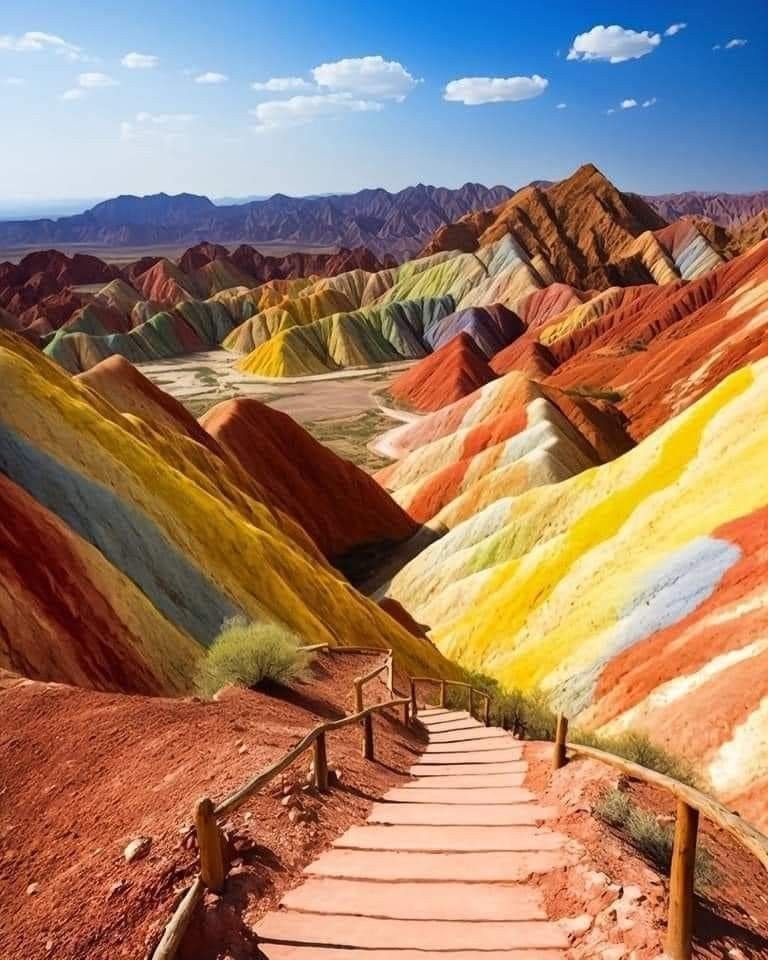
It is tempting to think of the Rainbow Mountains as a giant outdoor art installation, but they are fragile geological formations shaped over immense stretches of time. Visitors should remain on designated paths and viewing platforms, avoid climbing restricted slopes and follow local conservation rules.
The best photographs are not worth damaging a landscape that cannot simply be restored.
Why Zhangye Belongs on Your China Travel List
The Rainbow Mountains of Zhangye are unusual enough to make an impression before you arrive, but they are even more rewarding when experienced slowly. The striped ridges, the changing light and the sheer openness of the surrounding landscape make this a destination for travellers who enjoy places that feel genuinely different.
You do not need to be a geologist or an experienced adventurer to appreciate them. A little curiosity, comfortable walking shoes and time to explore are enough.
China has no shortage of famous landmarks, but Zhangye offers something less expected: a landscape where the rocks themselves tell the story. Millions of years of geological change have created a natural spectacle that no designer could quite reproduce. And once you have stood above those colourful ridges, it becomes easy to understand why photographs rarely do them justice.