

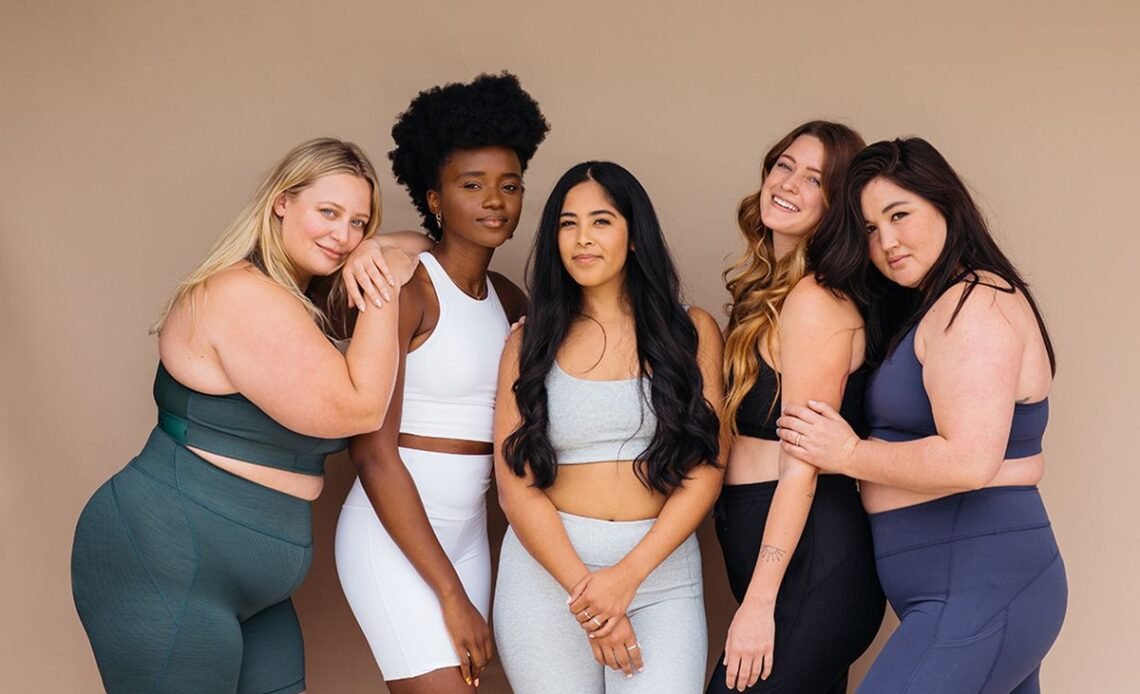
Fashion has always told women — and increasingly, everyone — what shape to be. The 1950s demanded an hourglass. The 1990s demanded nothing at all, preferably arranged over protruding collarbones. The 2010s pivoted to the curated curve: acceptable volume in specific, photographable places, achieved through specific, purchasable means. Every decade a new ideal. Every ideal a new product category built to close the gap between what bodies are and what fashion decided they should be.
Something different is happening now. And for the first time in the industry’s modern history, it is not being driven by a designer, a decade, or a demographic trend.
It is being driven by exhaustion.
From Body Positivity to Body Neutrality — Why the Shift Matters
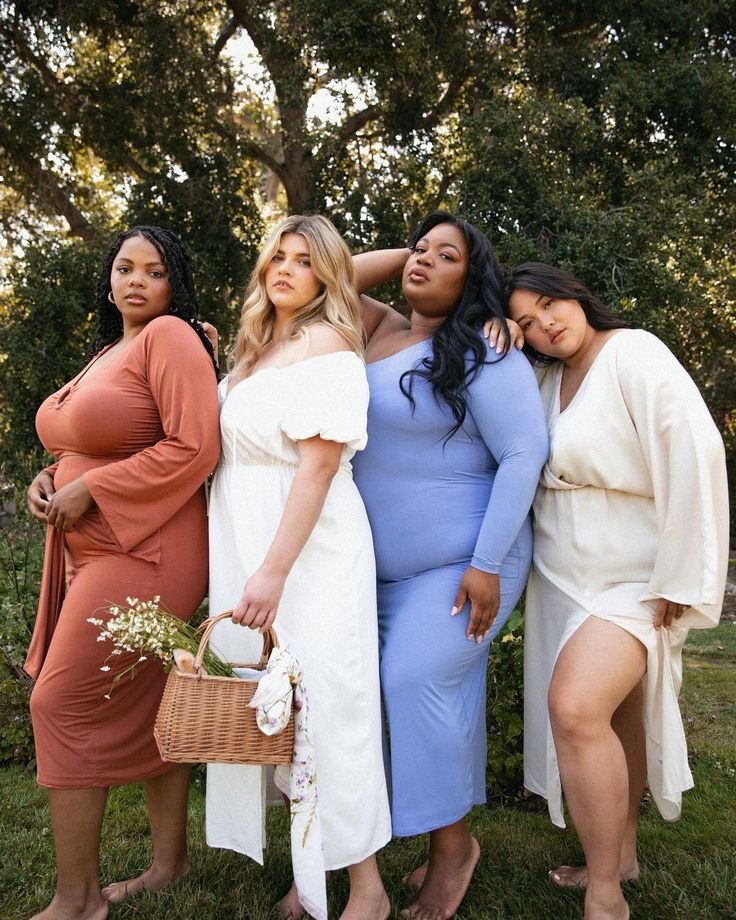
The body positivity movement of the early 2010s was a genuine cultural intervention — a necessary, overdue challenge to an industry that had spent decades producing clothing in a range of sizes that suggested most human bodies were an unfortunate inconvenience. It pushed visibility. It changed the conversation. It put plus-size models on magazine covers that had never previously considered the possibility.
But body positivity, as a cultural framework, carried a hidden demand of its own: that you love your body, celebrate it, perform joy about it loudly and publicly. For many people — particularly those navigating chronic illness, disability, gender dysphoria, or simply the ordinary complexity of being human in a physical form — that demand felt like a different kind of pressure wearing a more sympathetic face.
Body neutrality offers something quieter and, for many people, more sustainable. The proposition is not that you must love your body. It is that your body does not require a relationship with love or loathing at all. It exists. It functions. It carries you through the world. That is sufficient. The energy previously spent on evaluation — positive or negative — becomes available for other things.
For fashion, this reframe is structurally radical. Because an industry built on the premise that bodies need improving — through garments, through shapewear, through the strategic deployment of cut and fabric to create the illusion of a different body — has no obvious place in a world where bodies are simply accepted as they are.
The Size Revolution That Is Actually Happening
The numbers tell a story the industry has been slow to acknowledge. In the United States, the average woman wears a size 16 to 18. In the United Kingdom, it is a size 16. Across most of the developed world, the majority of women’s bodies exist in sizes that most fashion brands — until very recently — either didn’t produce or produced as an afterthought, in a limited range of styles, made from different and often cheaper fabrics, and sold in a separate section of the website labelled, with breathtaking condescension, “extended sizing.”
The brands leading the size revolution are not doing so out of altruism. They are doing so because the commercial case has become impossible to argue against. The plus-size fashion market is valued at over $700 billion globally and is growing at twice the rate of the standard fashion market. The consumer who has been systematically underserved by an industry for decades is, it turns out, not someone who stopped wanting clothes. She is someone who stopped buying them from brands that made her feel like a problem.
Universal Standard — the American brand that produces every garment in sizes 00 to 40 without tiered pricing, without separate sections, without different fabrics — has built a loyal following not by making a social statement but by making a commercial one: every size is a real size, made with the same materials, the same construction, and the same price tag. Savage X Fenty, Rihanna’s lingerie line, launched its entire range as size-inclusive from day one and demonstrated, with considerable commercial force, that this was not a niche decision but a market-capturing one.
What Body Neutrality Demands From Designers
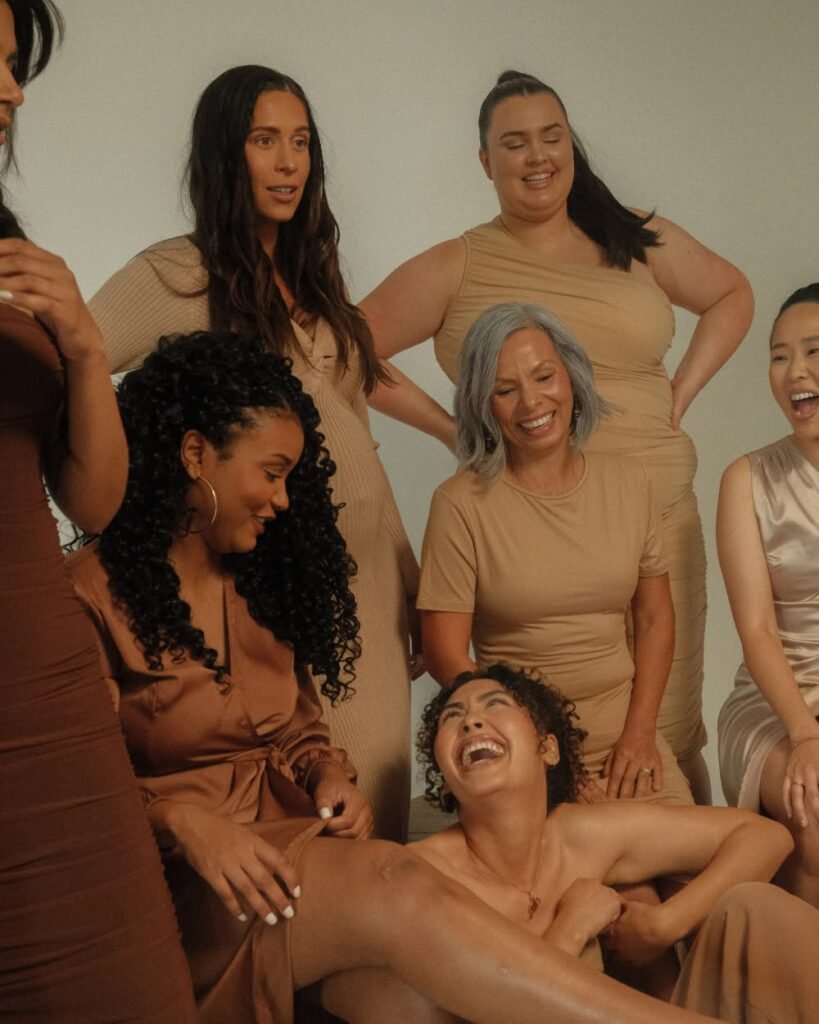
The shift from body positivity to body neutrality asks something specific and technically demanding of the fashion industry: design for the body as it is, not as a corrective intervention.
This means rethinking fit models — the industry standard of a single size-8 body around which all patterns are drafted, then mathematically scaled up and down in ways that produce garments which fit nobody outside the original sample size particularly well. It means grading patterns with different proportional logic for different size ranges, a process that costs more, takes longer, and requires a fundamental rethink of how fashion is produced at the pattern-making level.
It means abandoning the language of “flattering” — a word that has functioned, unchallenged, as a synonym for “visually minimising” for decades. A garment that makes a size 20 body look like a size 16 is not flattering. It is apologetic. The next generation of fashion consumers, with increasing clarity and decreasing patience, is rejecting the apology.
Several design schools in Europe and North America have begun removing the size-8 standard from their pattern-making curriculum entirely — replacing it with a range of base sizes that reflect actual population distribution. The designers graduating from these programmes will build their creative vocabulary around a different assumption of what a body is. That shift, quiet as it is, will reshape the aesthetic logic of fashion over the next decade more thoroughly than any trend cycle.
The Revolution Is Not Aesthetic. It Is Structural.
Every previous fashion revolution — the New Look, the mini skirt, deconstruction, athleisure — was aesthetic. A new silhouette. A new fabric. A new relationship between the body and the garment.
The body neutrality revolution is structural. It is a reorganisation of the assumptions beneath the design, before the fabric is cut and before the silhouette is decided. It asks: whose body is this industry for? And it is waiting, with increasing impatience, for an honest answer.
The brands that answer honestly — and back the answer with pattern-making, pricing, and production decisions that reflect genuine commitment — will own the next decade of fashion.
The brands that treat size inclusivity as a seasonal campaign, a capsule collection, or a press release will be remembered the way the industry remembers every half-measure: briefly, and without affection.