



You’re standing in front of a wardrobe packed so tightly the hangers barely move. Drawers that don’t close properly. A chair in the corner doing the job a wardrobe was supposed to do. And yet, somehow, impossibly — you have nothing to wear.
If this sounds familiar, you are not alone. And more importantly, you are not disorganised, not irrational, and not in need of more storage space.
You are experiencing one of the most common and least understood phenomena in modern consumer life. Researchers have a name for it. Stylists have a solution for it. And once you understand what’s actually happening inside that overcrowded wardrobe, the fix becomes not just clear — but surprisingly achievable.


The Problem Isn’t Too Few Clothes. It’s Too Many Wrong Ones.
Here is the counterintuitive truth at the heart of the full-wardrobe-nothing-to-wear paradox: the more clothes you own, the harder it becomes to get dressed.
This is not a motivational observation. It is a documented psychological phenomenon called decision fatigue — the cognitive exhaustion that sets in when the brain is confronted with too many choices. Studies from Columbia University and the University of Minnesota have consistently shown that an excess of options doesn’t increase satisfaction. It increases paralysis. The more items your eye has to scan, the harder it becomes to commit to any of them.
But decision fatigue is only part of the story.
The deeper issue is what fashion psychologists call wardrobe orphans — individual pieces that were purchased in isolation, without a clear sense of what they would work with, when they would be worn, or why they were genuinely needed. A sequinned top bought in a sale. A blazer in a cut that was fashionable eighteen months ago. Three near-identical white shirts because the first two were never quite right. Individually, each purchase made sense in the moment. Collectively, they form a wardrobe full of clothes that don’t talk to each other — and getting dressed becomes the daily task of trying to make disconnected pieces form a coherent language.
The wardrobe is full. The outfits don’t exist.
The Audit: What Actually Belongs in Your Wardrobe
Before anything is added, everything must be evaluated. This is the step most wardrobe advice skips — jumping straight to capsule wardrobe formulas and shopping lists without addressing what’s already there.
Pull everything out. Not metaphorically. Physically remove every item from your wardrobe and place it where you can see it. This is the moment most people experience their first genuine shock — the scale of what they own, laid out in full, is almost always dramatically more than they imagined.
Now apply a single, ruthless filter to every piece. Not the famous “does it spark joy” question, which is too abstract to be actionable. Instead, ask this: Would I buy this today, knowing what I know now about how I actually live, what I actually do, and what I actually feel good in?
The answer to that question about a significant portion of most wardrobes is no. The dress bought for a specific occasion that has never been worn since. The jeans in a size that hasn’t been accurate for two years. The “someday” pieces held onto for a life that hasn’t quite materialised. These are the wardrobe orphans. They take up physical space, but more importantly, they take up visual space — and every time your eye lands on a piece you wouldn’t choose, it slightly erodes your confidence in the pieces you would.
Remove everything that fails the test. Donate, sell, or store seasonally. What remains should be a collection of pieces you would genuinely reach for — a smaller number than you started with, and already far more functional.
The Architecture of a Wardrobe That Actually Works
What makes a wardrobe functional isn’t the number of pieces it contains. It’s the ratio of connectors to statements.
Connectors are the workhorses — the pieces that pair effortlessly with almost everything else in the wardrobe. A well-cut white shirt. Dark straight-leg jeans in a flattering fit. A blazer in a neutral that complements your colouring. A simple knit in a tone that anchors rather than competes. These are the pieces that make outfits happen without effort.
Statements are the pieces that express personality, mark occasions, or signal something specific about who you are that day. The silk blouse in a colour you love. The dress that makes you stand differently when you put it on. The shoes that are the point of the outfit, not an afterthought.
Most people’s wardrobes have this ratio inverted. Too many statements, not enough connectors. Pieces that demand attention without offering versatility. The result is a wardrobe full of individual items that resist combination — because every piece is competing to be noticed rather than working together to create something coherent.
The ideal ratio, which most stylists quietly apply to their own wardrobes, is roughly 70% connectors and 30% statements. When the connectors are right, the statements sing. When the connectors are missing, even the most beautiful statement piece sits unworn because there’s nothing to build an outfit around it with.
Colour Is the Hidden Variable Nobody Talks About
There is one wardrobe variable more responsible for the nothing-to-wear feeling than any other — and it is almost never addressed in mainstream fashion advice.
Colour incoherence.
Most wardrobes accumulate colour randomly — a burgundy piece here, a cobalt blue there, a mustard yellow that was a trend two seasons ago, olive green bought because it was on sale. None of these colours are wrong individually. But a wardrobe built from random colour decisions produces pieces that don’t naturally combine with each other, requiring specific pairings that are hard to remember and harder to execute at seven in the morning.
The solution is not a monochromatic wardrobe. It is a considered colour palette — three to five tones that you genuinely look good in, that you are genuinely drawn to, and that naturally work together when layered or combined. Building your connector pieces within this palette means that almost any combination of items you pull from your wardrobe will work. The outfits don’t need to be planned. They emerge naturally from pieces that were always designed to coexist.
Identifying your palette doesn’t require a colour consultation or a style quiz. It requires looking at the photographs where you felt you looked best — and noticing what colour you were wearing. Patterns emerge quickly. And once they do, future shopping decisions become dramatically easier: does this fit my palette? If not, it stays on the rail.

The Shopping Habit That Keeps the Problem Alive
Here is the uncomfortable part of the full-wardrobe-nothing-to-wear conversation that most wardrobe advice carefully avoids.
The wardrobe got this way because of how you were shopping — and fixing the wardrobe without fixing the shopping habit means the problem returns within twelve months.
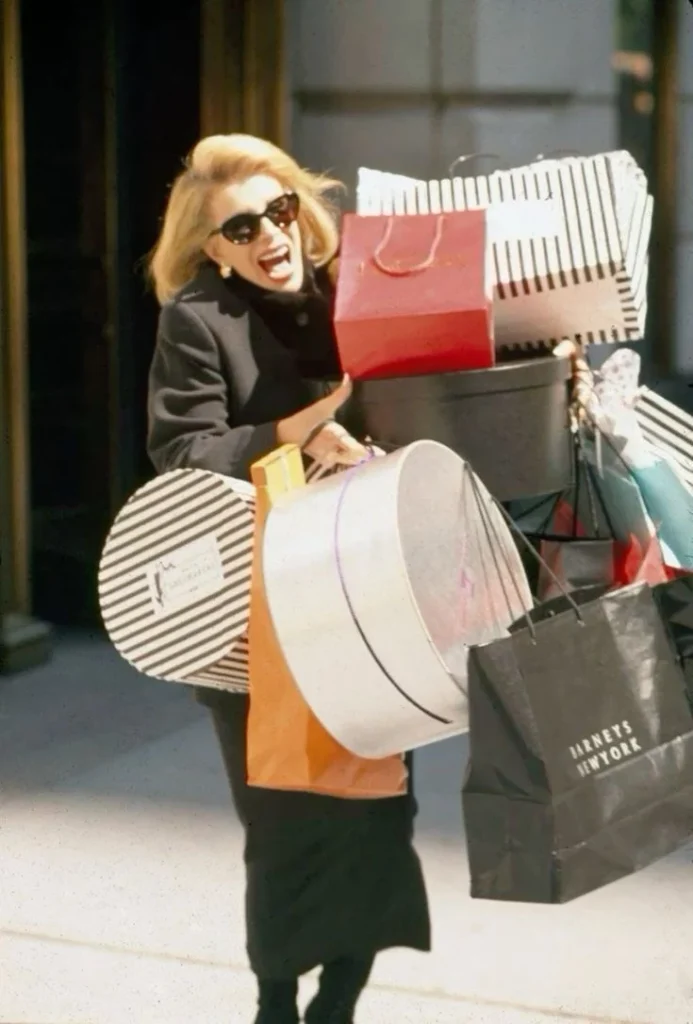
The shopping pattern that creates wardrobe orphans is reactive rather than intentional. Browsing without a specific gap in mind. Buying because something is reduced rather than because it’s needed. Purchasing trend pieces without considering whether they integrate with what already exists. Being drawn to something in isolation — on a hanger, on a model, in a flat lay — without asking the critical question: what do I already own that this works with?
The shift is from shopping as recreation to shopping as curation. Treating every purchase as an addition to a collection rather than an impulse response to something that caught your eye. Before buying anything new, identifying at least three specific items already in your wardrobe that it would pair with. If three don’t come to mind immediately, the piece doesn’t belong in your wardrobe — regardless of how much you like it on the hanger.
This single habit change — applied consistently — transforms a wardrobe from a chaotic accumulation into something genuinely curated. Something you open each morning and feel a quiet satisfaction in, rather than a daily low-level dread.
What the Fixed Wardrobe Actually Feels Like
When people implement these principles fully — the audit, the connector-to-statement ratio, the colour palette, the intentional shopping habit — something shifts that goes beyond getting dressed more easily.
The wardrobe stops being a source of low-level anxiety and becomes a source of quiet confidence. Getting dressed in the morning stops being a decision and starts being a practice. And the strange, persistent feeling of having nothing to wear — despite owning more clothes than most people in human history ever have — disappears entirely.
Not because more was added. Because the right things remained.