


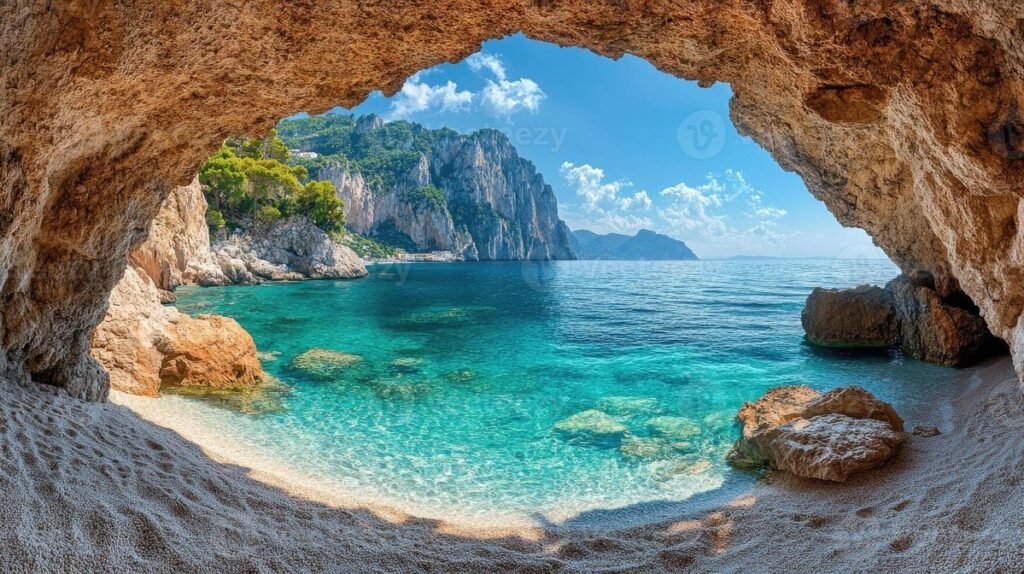
The Caribbean has a template. White sand beaches, turquoise water, all-inclusive resorts arranged along a coast that has been optimised over decades for the specific expectations of the visitor who arrives wanting to feel warm, fed, and sufficiently far from their ordinary life. The formula works. It works commercially, logistically, and experientially for the millions of travellers who choose it every year and find, reliably, that it delivers what it promised.
Dominica does not have white sand beaches. It does not have a Sandals resort or a Marriott or a duty-free strip or a cruise ship terminal large enough to receive the mega-ships that dock at its neighbours. What it has is 750 metres of annual rainfall, nine active volcanoes, the second-largest boiling lake in the world, 365 rivers — one for every day of the year, by local count — a rainforest so dense and so intact that it covers 60% of the island’s surface, and a deliberate, decades-long decision to be something entirely different from every other island in the region.
That decision has made Dominica, in 2026, the most interesting island in the Caribbean.

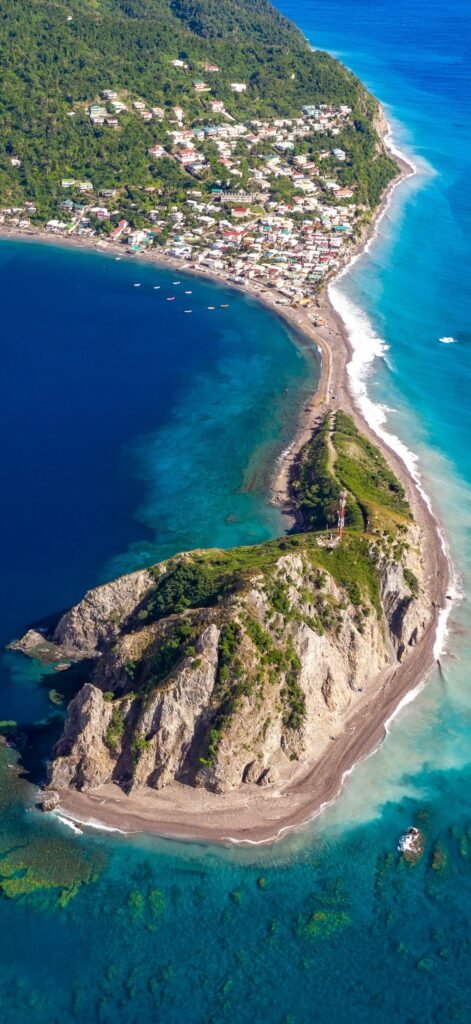
The Nature Island by Choice, Not Default
Dominica — pronounced dom-in-EE-ka, distinct from the Dominican Republic — sits between Guadeloupe and Martinique in the eastern Caribbean. It is 750 square kilometres of volcanic terrain so dramatic that the topography itself functions as a tourist filter: the island’s mountainous interior, its lack of coral sand beaches (the beaches that exist are black or grey volcanic sand), and its relatively limited nightlife infrastructure simply do not match the expectations of the mass Caribbean market. The travellers who arrive anyway are, by self-selection, the ones who came for something else.
The Kalinago people — the indigenous Caribbean community whose presence on the island predates European arrival, and one of the last such communities to maintain a territorial reserve in the Caribbean — occupy the Kalinago Territory on the island’s northeastern coast. Their continued presence, their craft traditions, their knowledge of the rainforest that surrounds their territory, and the tourism model they have developed on their own terms — guided tours, cultural demonstrations, community accommodation — represent something almost without parallel in the Caribbean: an indigenous community that has maintained both cultural continuity and a degree of economic self-determination through tourism rather than despite it.
What the Rainforest Actually Contains
The Morne Trois Pitons National Park — a UNESCO World Heritage Site since 1997 — covers a significant portion of Dominica’s southern interior and contains the highest concentration of geothermal activity per square kilometre of any island in the Lesser Antilles. The Boiling Lake — accessible by a demanding six to seven-hour return hike through jungle, cloud forest, and a valley called the Valley of Desolation where fumaroles vent sulphurous steam from bare volcanic rock — is the second-largest thermally active lake in the world. The water temperature at its edges reaches 82 to 91 degrees Celsius. The centre boils.
The hike to the Boiling Lake is not a walk. It is a serious undertaking on a trail that gains and loses 800 metres of elevation, crosses rivers, traverses exposed ridgelines in weather that can change from clear to cloud in twenty minutes, and deposits the hiker — eventually, sweating, with legs that have developed opinions about the return journey — at the edge of a flooded fumarole of extraordinary, alien beauty. There is nothing else quite like it in the Caribbean. There is very little else quite like it anywhere.
Below the interior’s volcanic drama, the snorkelling and diving in Dominica’s waters operates in a category distinct from the reef diving of the northern Caribbean. The volcanic substrate of the island continues beneath the waterline — creating underwater hot springs, dramatic walls, and a marine diversity that the absence of reef bleaching events (the volcanic chemistry of the water provides a degree of thermal buffer) has allowed to remain intact in ways that comparable sites across the region cannot claim.
Champagne Reef — named for the constant stream of volcanic bubbles rising through the seabed, producing the visual and tactile sensation of swimming through sparkling water — is the most famous dive site and also one of the most genuinely unusual: snorkelling over warm, effervescent seafloor in visibility so clear that the bubble streams are visible from the surface before entry.

Hurricane Maria and the Rebuilding
Any honest account of Dominica in 2026 must include September 18, 2017: the day Hurricane Maria made landfall on the island with 260 km/h sustained winds and destroyed, in a single night, approximately 90% of the island’s structures. Every building damaged or destroyed. The road network rendered impassable. The rainforest — visible from satellite imagery as a green island gone suddenly brown — stripped of its canopy.
The Prime Minister of Dominica, Roosevelt Skerrit, addressed the nation from a rooftop while the hurricane was still passing, having been evacuated from his own flooding home. The speech — broadcast live to a world that watched with the specific horror of witnessing a small island simply disappear under a storm — was also a declaration: Dominica would rebuild. And it would rebuild as the world’s first climate-resilient nation.
That commitment has driven the rebuilding standards, infrastructure investment, and international partnerships that have shaped Dominica since 2017. Buildings now meet hurricane standards designed for Category 5 events. The electricity grid is being rebuilt with underground cabling. Renewable energy targets aim for 100% clean energy by 2030. The rainforest — which recovered with a speed that surprised ecologists — is greener now than the photographs from before the storm.
Dominica’s response to Maria is, arguably, its greatest act of tourism marketing: a small island that was flattened and rebuilt itself according to its own values, on its own timeline, for its own reasons.
Who Goes to Dominica and Why They Come Back
The traveller Dominica attracts is specific: hikers, divers, naturalists, people who have done the Caribbean circuit and found it sufficient but not quite enough. Couples who want to wake up in a rainforest to the sound of the Sisserou parrot — Dominica’s national bird, endemic to the island and found nowhere else on earth — rather than to the sound of a swim-up bar preparing for the day.
The accommodation infrastructure has grown since Maria’s rebuilding — eco-lodges and boutique properties embedded in the rainforest, some operating off-grid, some at price points that rival the region’s luxury offerings — but it remains at a scale that preserves the island’s fundamental character. You cannot arrive in Dominica and feel that the island is performing for your visit. It is simply going about its existence, in the way it has for longer than Caribbean tourism has existed.
That quality — of a place that has not adjusted itself to your expectations — is increasingly rare in the Caribbean. In the world, frankly.
How to Go
Dominica is reached by inter-island flights from Barbados, Antigua, Martinique, Guadeloupe, San Juan, and St. Maarten — connections that typically require a small aircraft and a domestic terminal rather than an international one. The main airport, Douglas-Charles, sits on the northeastern coast and handles turboprop aircraft; a new international airport capable of receiving larger jets has been under development.
Ferry services connect Dominica to Martinique and Guadeloupe — a slower but genuinely scenic alternative that arrives by sea into Roseau’s small port with the island’s volcanic interior already visible above the town.
The dry season — February to June — offers the most reliable hiking conditions, though Dominica’s rainfall is such that the rainforest is green and the rivers full year-round. The Boiling Lake hike requires a licensed guide — bookable through the Discover Dominica Authority or directly through Roseau-based operators. Book early in peak season. Book with someone who has done it recently enough to know the current state of the trail.
Go expecting to work for your beauty. Dominica does not hand it to you. It waits to see if you will come and find it.