


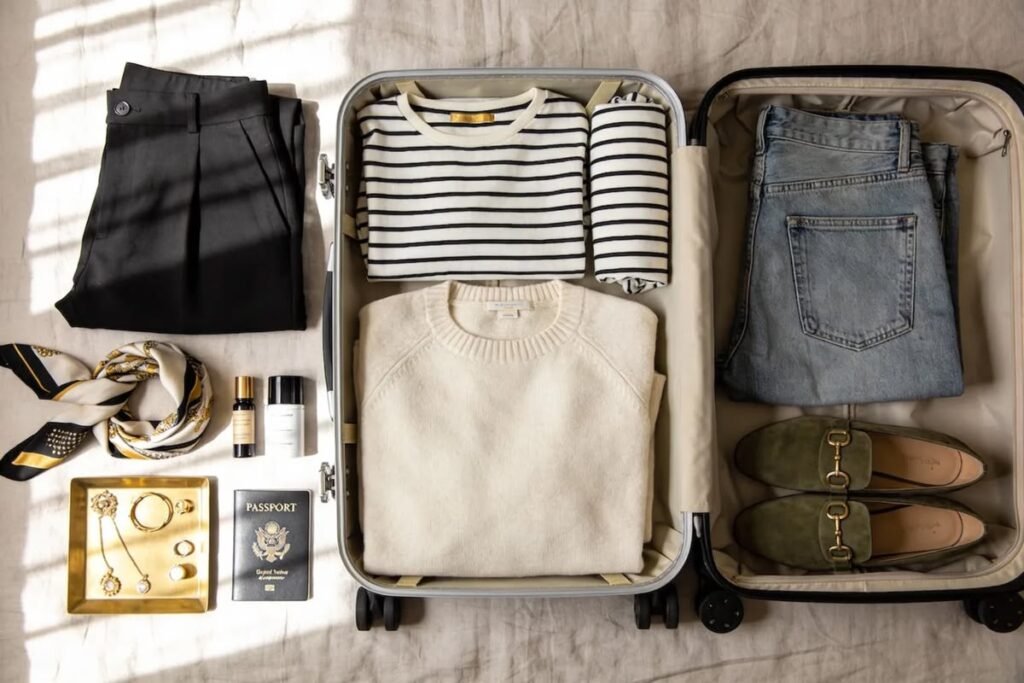
There is a moment every seasoned traveller remembers — standing in a baggage claim hall watching the carousel rotate for the fourth time, watching other passengers collect their bags and walk away, while yours has taken an unscheduled detour to a city you didn’t visit. Or the quieter version: wrestling an oversized suitcase up a cobblestone street, through a narrow hostel corridor, and into a lift too small to hold both you and your luggage simultaneously. Both versions of this experience tend to produce the same realisation: you packed too much, and most of it was unnecessary. The capsule travel wardrobe is the permanent solution to both problems — and in 2026, it has never been easier or more stylish to build one that actually works.

What a Capsule Travel Wardrobe Actually Is
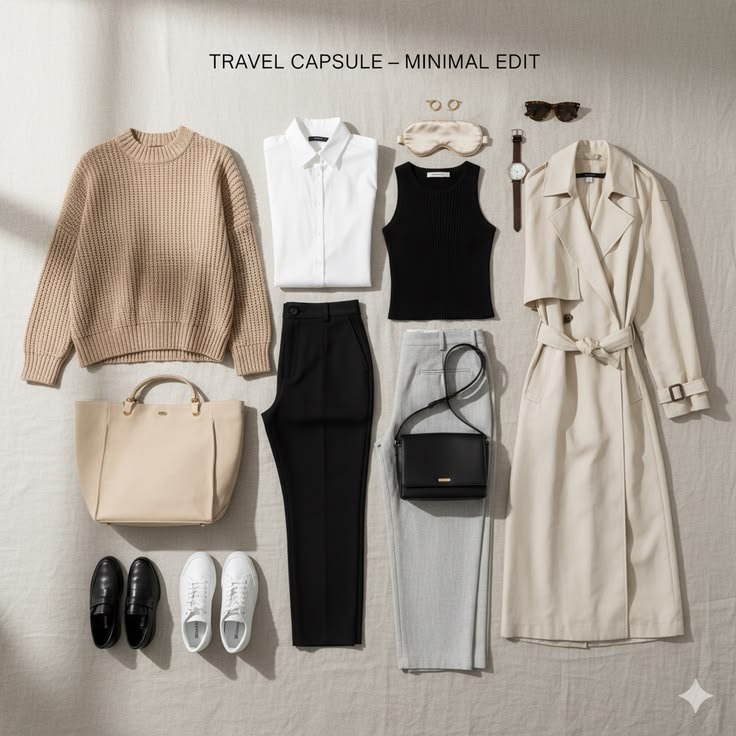
A capsule travel wardrobe is not a minimalist aesthetic choice or a packing challenge. It is a deliberate, mathematically organised wardrobe system built around pieces that mix and match with each other completely, so that a small number of garments produces a disproportionately large number of outfits. The Sudoku method — currently one of the most widely used frameworks — uses a 9-item grid of three tops, three bottoms, and three layers, where every item combines with every other. The resulting outfit combinations from nine garments total 27 or more distinct looks, with pieces that can serve dual roles pushing that number higher still. With a 9-grid system of 3 rows and 3 columns, where every piece can be mixed and matched by choosing one from the top, one from the bottom, and one from the layer, you generate 27 outfits — and in reality, potentially more, since clothing items can fall into more than one category and can transform. The arithmetic is the whole point: you are not packing outfits, you are packing a system.
Start With a Colour Foundation, Then Edit Ruthlessly
The single most common capsule wardrobe failure is buying individual pieces that look good in isolation but don’t connect to anything else. The solution is to define a colour foundation before selecting a single item. Starting with a navy base and adding coordinating neutrals and colour accents works well — navy is widely available, dresses up or down, and works seasonally year-round, making it an ideal neutral for travel capsules. Black, white, camel, and denim are equally strong anchors. The rule is strict: every piece must work with at least three other pieces in the bag. If it only pairs with one thing, it doesn’t travel.
Any great capsule wardrobe starts with a foundation of solid basics, with one or two patterns or pops of colour for added interest — and every single piece should easily match the others and be worn two to three times throughout the trip. The statement pieces — the printed blouse, the textured jacket — earn their place precisely because they transform the entire look of the basics around them, not because they stand alone.
The 54321 Method: A Practical Packing Framework
For travellers who prefer a structured formula over intuitive editing, the 54321 packing method is the most refined and widely tested system currently in use. The 54321 packing method is a simple and flexible travel capsule wardrobe formula designed to help you pack only the essentials — providing a solid starting point that can be adjusted based on destination, plans, and the clothes you feel comfortable in. It takes the stress out of packing by setting boundaries around each category, reducing decision fatigue, and preventing the last-minute spiral where you cram in a few more things, just in case. The standard version works well for trips lasting one to four weeks, with laundry planned if the trip extends beyond a week.

Fabric Is the Element Most Travellers Get Wrong
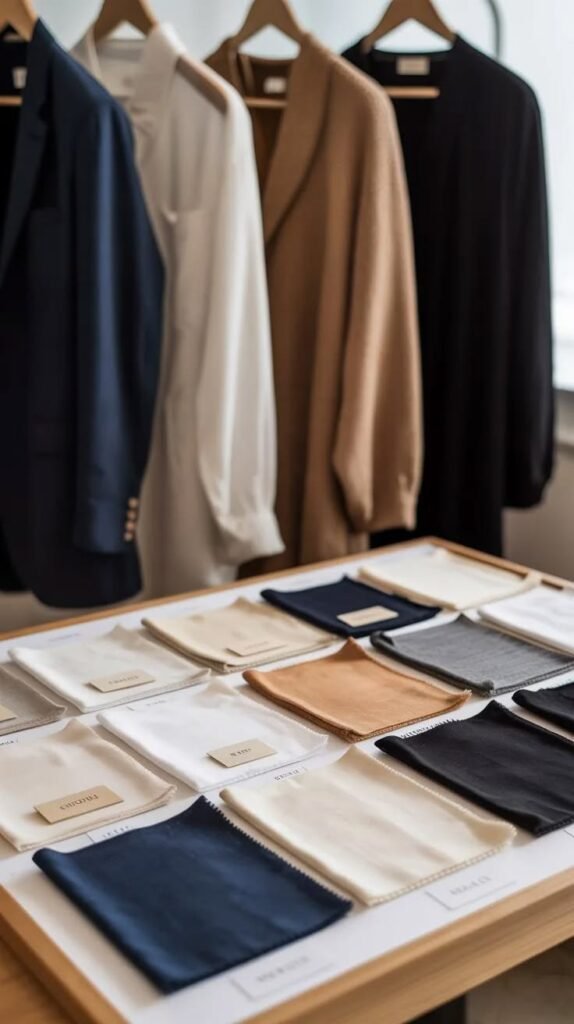
Style decisions matter, but fabric decisions determine whether a capsule wardrobe functions in practice. The right materials will keep you comfortable, fresh, and looking sharp without a wrinkle in sight — and when curating items, always look for adaptability. Merino wool is the near-universal recommendation among experienced light packers: it regulates temperature across a wide range of conditions, resists odour significantly better than synthetic alternatives, and can be hand-washed and dried overnight. Linen works brilliantly in warm climates — lightweight, breathable, and wrinkle-tolerant in a way that reads as effortlessly casual rather than dishevelled. Both fabrics pack tightly, dry quickly, and hold their shape across multiple wears between washes.
Avoid cotton in bulk: it absorbs moisture, dries slowly, and takes up disproportionate bag space relative to its versatility. Reserve it for a single T-shirt or base layer worn against the skin.
The Shoes Rule: Two Pairs, Maximum Three
Footwear is where most capsule wardrobes collapse. The discipline required is straightforward: two pairs of shoes are the target, three is the absolute ceiling. One versatile, comfortable walking shoe that can carry a casual daytime look — a leather sneaker or clean-soled loafer — and one dressier option that handles an evening out without being impractical for a cobblestone walk to the restaurant. The third slot, if used, belongs to a sandal for warm destinations or a lightweight boot for cool ones. Wear the bulkiest pair on travel days. Never pack what you can wear.
The Overnight Test: A Pre-Travel Filter That Works
Always try hand-washing chosen trip clothing at home first to see if it dries overnight and doesn’t wrinkle up. This single pre-travel test eliminates more packing mistakes than any packing list ever written. If a garment cannot be washed in a hotel sink and worn again the following morning, it is not a travel garment regardless of how much you love it at home.
The Mindset Behind the Method
While it can be tempting to build a travel wardrobe full of your most Instagrammable outfits, travel should be about savouring the experience — not just documenting it. It’s so much easier to hop on and off trains or manage multiple flights of stairs when you lighten the load. The capsule travel wardrobe is not a sacrifice. It is a reallocation — trading the dead weight of overpacking for the very real freedom of moving through the world with everything you need in a bag that fits in the overhead compartment. Once you experience that, checking a bag becomes genuinely difficult to justify.