


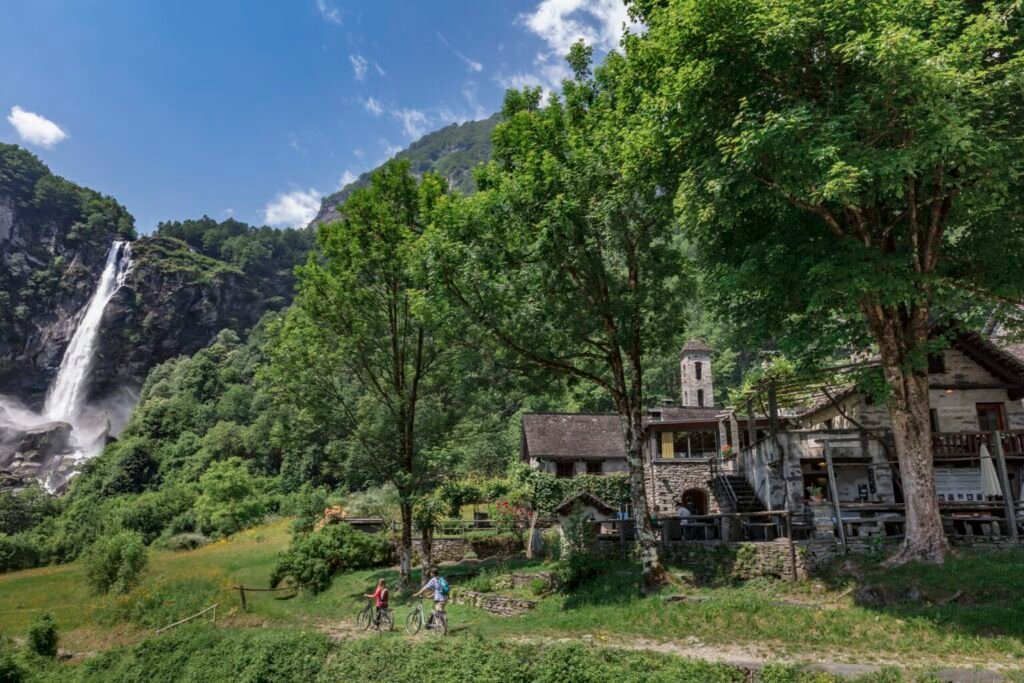
Located in the scenic Maggia Valley of southern Switzerland, Cevio is a quiet village known for its beautiful traditional stone architecture. Surrounded by forests and mountains, Cevio offers a glimpse into an older Alpine lifestyle where buildings were designed to endure harsh weather and changing seasons. Walking through the village feels like traveling back in time, where solid stone houses and narrow streets tell stories of generations who lived closely connected to the land.
Unlike Switzerland’s famous resort towns, Cevio remains calm and authentic. Visitors come here not for luxury shopping or busy attractions but to experience the peaceful charm of a historic Alpine settlement shaped by nature and tradition.
A Village Built from Stone
The most striking feature of Cevio is its architecture. Many buildings are constructed from locally quarried stone, giving the village a distinctive gray and earth-toned appearance. Thick stone walls were originally designed to protect residents from cold winters and strong mountain winds.
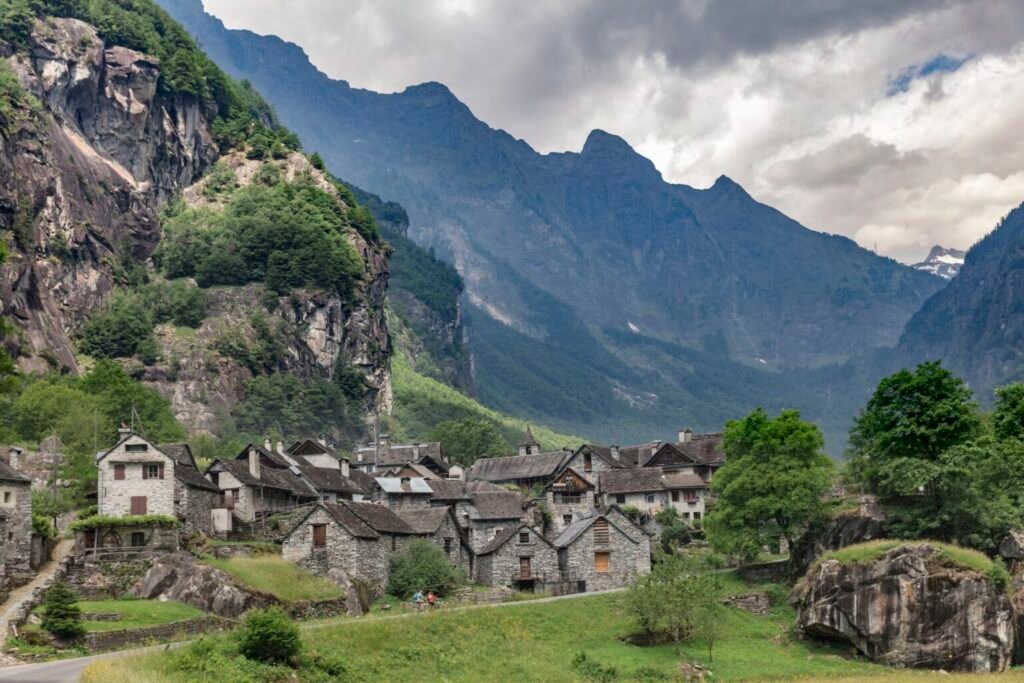
These traditional structures often feature small windows, wooden shutters, and heavy slate roofs. The buildings appear sturdy and timeless, blending naturally with the rocky slopes that surround the valley. Walking along the village streets, you will notice how every structure feels connected to the landscape.
Stone was the most reliable building material available to early settlers, and its durability means many homes have survived for centuries. Even newer buildings often follow the same style, preserving the village’s historical character.
Narrow Streets and Hidden Corners
Exploring Cevio on foot is the best way to appreciate its traditional atmosphere. Narrow lanes wind between rows of stone houses, creating a quiet and intimate environment. These paths were originally designed for pedestrians and farm animals rather than vehicles, which adds to their old-world charm.
Small courtyards and gardens appear unexpectedly between the houses. Wooden balconies decorated with flowers overlook the streets, bringing color and life to the gray stone surroundings.
In some parts of the village, stone staircases lead to elevated terraces where residents once stored firewood or dried crops. These details offer insight into the daily routines of earlier generations.
Walking slowly allows visitors to notice textures and details — the rough surfaces of ancient walls, carefully shaped stone doorways, and iron fixtures that have weathered decades of mountain storms.
Life in the Maggia Valley
Cevio has long served as an important center in the Vallemaggia region. Historically, the village functioned as a gathering place for farmers and traders from surrounding mountain communities.
Agriculture and seasonal migration shaped daily life here. Families spent summers tending animals in high mountain pastures and returned to stone houses in the valley during winter. The architecture reflects this seasonal rhythm, with storage spaces and barns integrated into many homes.
Today, Cevio remains a living community rather than an open-air museum. Locals maintain traditions while adapting to modern life, creating a balanced blend of past and present.
Visitors often notice the relaxed pace of life. Conversations take place in village squares, and daily routines unfold without hurry.
Rustic Beauty of Stone Houses
Many traditional homes in Cevio include attached barns or storage rooms built from the same stone as the main house. These structures once protected animals and preserved tools or crops.
The stone surfaces change color depending on the light. Early morning sunlight gives the buildings a warm golden tone, while evening shadows highlight the texture of each carefully placed rock.
Some historic buildings have been restored into holiday homes while keeping their original appearance. Inside, modern comforts coexist with stone walls and wooden beams, showing how traditional architecture can adapt to contemporary living.
This balance between preservation and modernization helps maintain the village’s authentic atmosphere.
A Quiet Cultural Experience
Cevio offers a cultural experience that feels natural rather than staged. There are no large tourist crowds, and visitors can explore at their own pace.

A simple walk through the village provides a deeper understanding of Alpine heritage. Every building reflects the practical needs and craftsmanship of earlier generations.
Seasonal changes bring different moods to the village. In spring and summer, flowers soften the stone surroundings. Autumn introduces warm colors and clear mountain air. Winter covers rooftops with snow, emphasizing the strong lines of the stone architecture.
Preserving a Living Heritage
Cevio’s traditional stone buildings represent more than architectural beauty — they are symbols of resilience and adaptation. Generations of residents shaped the village using materials from the surrounding mountains, creating structures that have stood the test of time.
Today, these stone houses continue to define the identity of Cevio. Visitors who wander through the quiet streets discover not only a historic village but also a living connection to Switzerland’s Alpine past.
In Cevio, the story of the mountains is written in stone, offering a peaceful and enduring glimpse into traditional Swiss life.