

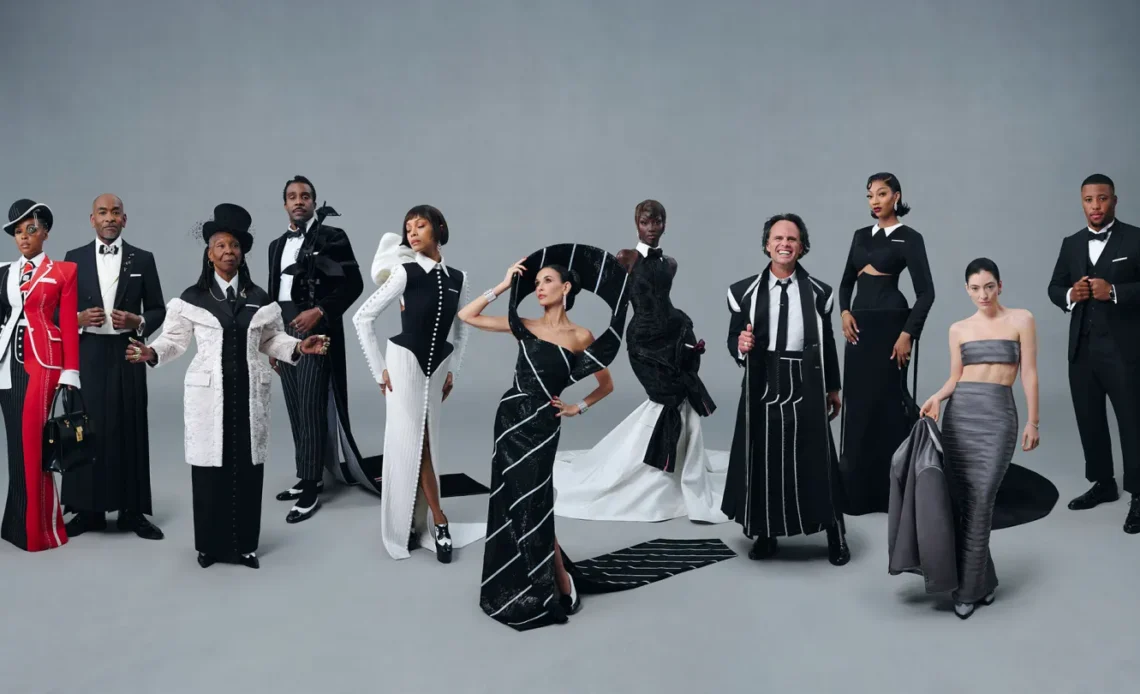
a modest benefit in 1948 has become the premier cultural event of the year—a convergence of art, fashion, celebrity, and philanthropy. As we look ahead to Met Gala 2025, it’s worth retracing the gala’s journey from its humble origins to its current status as a global media spectacle.

Origins: A Modest Fundraiser (1948–1960s)
The inaugural event, held on April 21, 1948, was organized by publicist Eleanor Lambert to raise funds for the newly founded Costume Institute at the Metropolitan Museum of Art. Initially called “the 1948 Costume Institute Benefit,” the evening brought together a select circle of socialites and industry insiders. Held at the Waldorf Astoria, the gala featured cocktails and a luncheon, raising just enough to support a single exhibition⁺.
Throughout the 1950s, the Benefit maintained an aura of exclusivity, with guest lists curated by Mrs. Lambert herself. Themes were modest—often tied directly to the Costume Institute’s annual exhibition—and press coverage was limited to society pages. The event’s primary purpose was clear: to bolster the Institute’s mission of educating the public about the history of dress.
Transformation Under Diana Vreeland (1960s–1970s)
In 1961, visionary Vogue editor Diana Vreeland assumed the role of Costume Institute curator. Vreeland infused the Benefit with her trademark flair, introducing more daring themes and encouraging guests to embrace flamboyant evening wear. Her tenure saw the Benefit rebranded as the “Costume Institute Gala” and relocated to the Museum itself, adding gravitas and a direct connection to the exhibitions it underwrote.
During the 1970s, the Gala became more theatrical. Vreeland orchestrated immersive installations—such as dramatic set designs that mirrored exhibition themes—and personal invitations stressed imaginative interpretations of prescribed dress codes. Though still relatively small (200–250 guests), the Gala began to attract fashion legends like Halston and Yves Saint Laurent, raising its profile beyond New York high society.
The Anna Wintour Era: Celebrity and Spectacle (1995–Present)
In 1995, Anna Wintour took the helm as Vogue’s editor-in-chief and co-chair of the Gala alongside the Museum’s director. Wintour’s strategic pairing of A-list celebrities with top designers transformed the Gala into a star-studded affair. Ticket prices skyrocketed—from approximately $5,000 per head in the early 1990s to over $50,000 in recent years—turning the event into one of the world’s most expensive fundraising nights.
Under Wintour, themes became bold cultural statements: from “China: Through the Looking Glass” (2015) to “Heavenly Bodies: Fashion and the Catholic Imagination” (2018). Each year, designers craft elaborate gowns and suits aligned with the thematic vision, ensuring that the red carpet itself becomes an extension of the Museum’s exhibition space. Media outlets and social platforms now treat the Met Gala as a global fashion forecast, dissecting every look in real time.

The Digital Age and Social Media Influence
The advent of social media has only magnified the Gala’s reach. Platforms like Instagram and TikTok amplify red-carpet moments, fueling millions of likes, shares, and viral trends within hours. Live streams of the arrivals, official behind-the-scenes content, and designer interviews turn a single evening into weeks of buzz. Brands vie for product placement in looks, while influencers offer real-time commentary, democratizing access to what was once an impermeable social fortress.
Looking Ahead to 2025
Met Gala 2025 promises to continue this legacy of innovation and spectacle. While details of the theme remain tightly guarded until the official announcement, expect a fusion of digital and physical realms—perhaps augmented reality installations or interactive virtual exhibits that echo the Costume Institute’s latest scholarly focus. Sustainability, already a growing concern in fashion, may take center stage, with eco-conscious materials and circular-design principles showcased on the famed steps of the Met.
Conclusion
From a luncheon fundraising event for a fledgling Costume Institute to the world’s most dazzling celebration of fashion, the Met Gala’s evolution mirrors broader cultural shifts: the elevation of fashion to high art, the rise of celebrity influence, and the digital transformation of media. As Met Gala 2025 approaches, it stands as both a testament to nearly eight decades of creative collaboration and a harbinger of ways in which fashion—and philanthropy—will continue to evolve.