


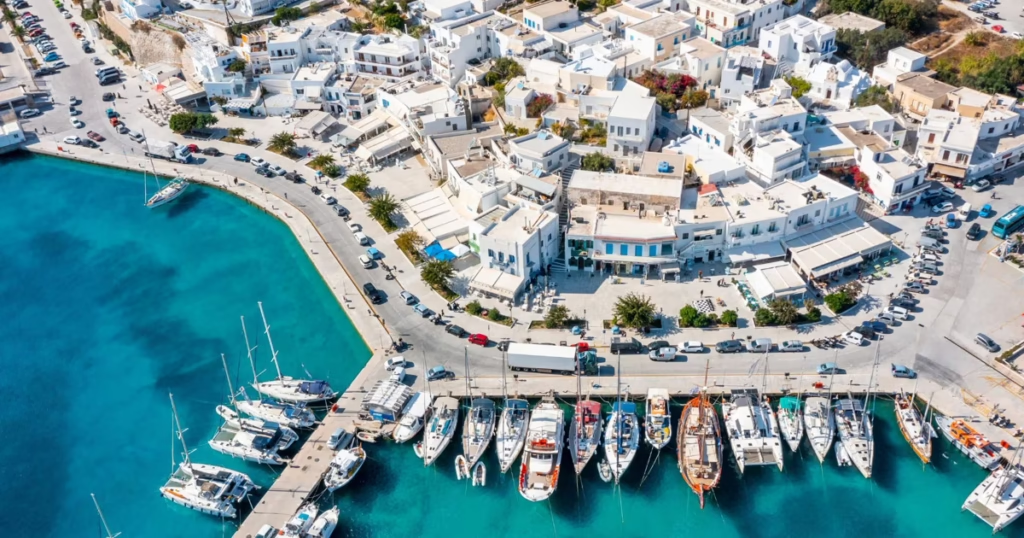
Some destinations charm you instantly; others work like whispers — gentle, patient, unforgettable. Milos, one of Greece’s lesser-known Cycladic islands, belongs to the latter. Shaped like a horseshoe and bathed in the same Aegean light that inspired poets and painters, Milos offers something that few islands manage anymore — tranquility wrapped in raw, natural beauty.
My journey began at Adamas, the island’s main port, where whitewashed houses gleamed under a brilliant blue sky. The air smelled faintly of salt and thyme, and the slow rhythm of island life set in immediately. Unlike its more crowded cousins — Santorini and Mykonos — Milos feels intimate. It’s not a place to rush through; it’s a place to sink into.

The island is famous for its unearthly beaches, and it doesn’t disappoint. I started at Sarakiniko, perhaps the most photographed spot on Milos. Standing there felt like being on another planet — smooth white volcanic rock sculpted by wind and waves into otherworldly curves. The contrast of bone-white stone against the sapphire sea was mesmerizing. Swimmers leapt from the cliffs into crystal-clear waters, laughter echoing against the hollowed rocks. It’s the kind of place where you lose track of time — and gladly so.
Further along the coast, I found Firiplaka Beach, where cliffs rise in shades of red, orange, and gold. The volcanic layers tell the story of the island’s fiery past. Here, the sea shifts colors with every hour — emerald in the morning, turquoise by noon, and deep cobalt at sunset. A tiny beach bar served chilled lemonade, and the only soundtrack was the soft hum of waves meeting sand.
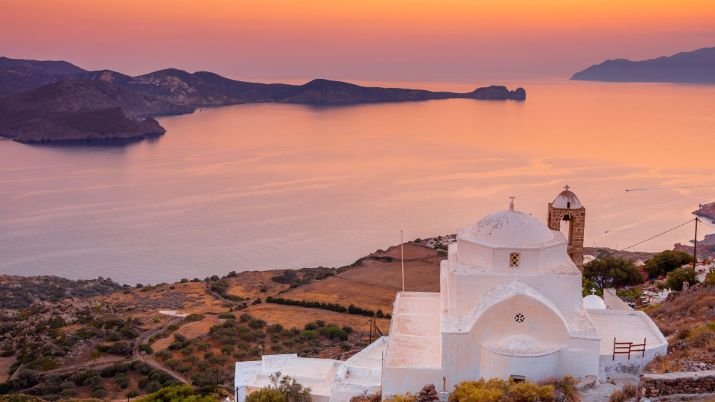
But Milos isn’t just about its coastline. The island’s interior holds treasures of its own. In the village of Plaka, cobblestone lanes wind past blooming bougainvillea and white chapels perched on hilltops. From the Kastro, the island’s ancient Venetian castle, I watched the sun sink into the Aegean. As the light faded, the rooftops turned to gold, and the sea mirrored the fiery sky — a sunset so stunning it felt almost sacred.
The island’s history runs deep. Milos is where the famous Venus de Milo, now displayed in the Louvre, was discovered in 1820. In Trypiti, I visited ancient catacombs carved into volcanic rock — a haunting yet fascinating reminder of early Christian life. The cool, echoing tunnels contrast sharply with the sunlit world above, offering a glimpse into the island’s storied past.
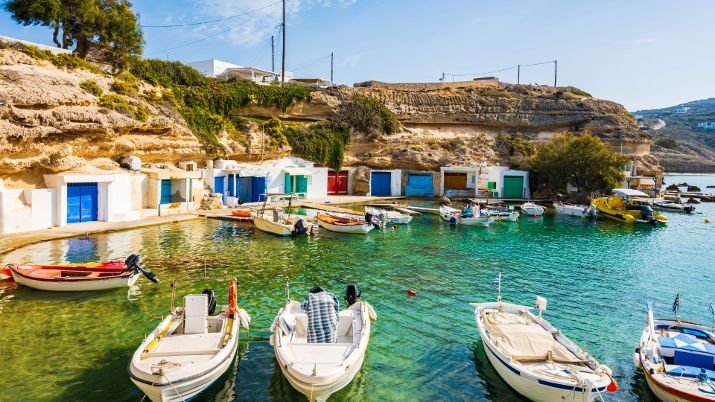
Evenings in Milos carry a special magic. Tavernas fill with the scent of grilled octopus, fresh olive oil, and oregano. I dined by the sea in Pollonia, a small fishing village where boats bob gently against the docks. Locals chatted over ouzo as children played along the shore. Everything moved at its own easy rhythm — unhurried, authentic, deeply human.
What makes Milos truly special is its balance — between solitude and warmth, wild nature and quiet culture. It’s an island that asks nothing from you except to slow down and notice: the sound of the wind through the rocks, the shimmer of the sea at noon, the kindness in a stranger’s smile.
When I left, the ferry cut through waters so blue they seemed unreal. The cliffs of Milos receded into the horizon, glowing softly in the morning light. I realized that this “hidden gem” wasn’t hidden at all — it was simply waiting for those who listen more than they look.
Milos isn’t a postcard. It’s a feeling — timeless, pure, and impossibly beautiful.