


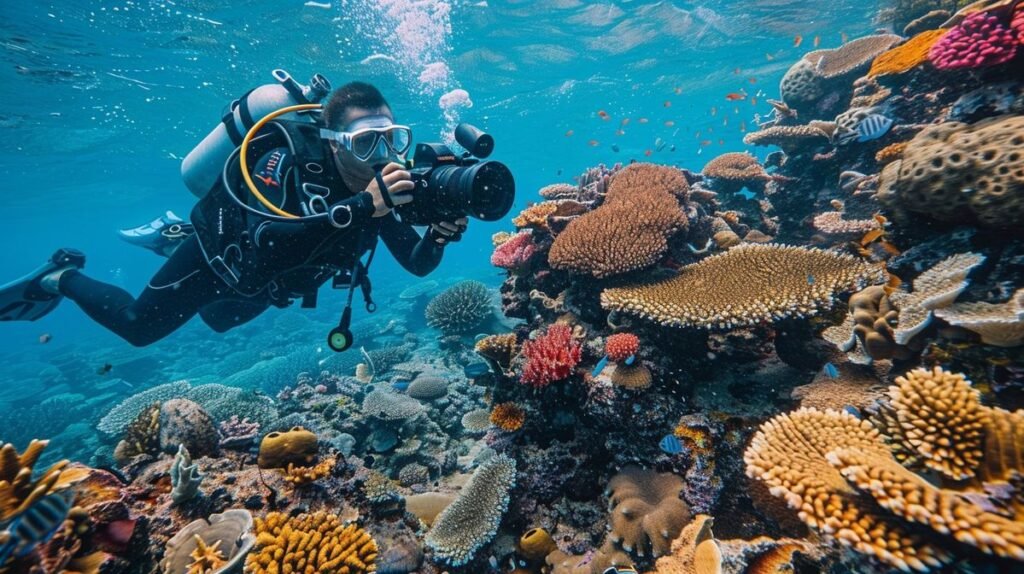
If you roll over the side of a boat in Raja Ampat, the first thing that hits you isn’t just how clear the water is—it’s how impossibly loud it feels.
Not loud with engine noise, but with pure, chaotic life. Schools of thousands of fusiliers and jacks move together in giant, shimmering walls, their movements creating a low hum against the reef. Below them, soft corals in every shade of purple, orange, and yellow spill over limestone walls like an overgrown jungle.

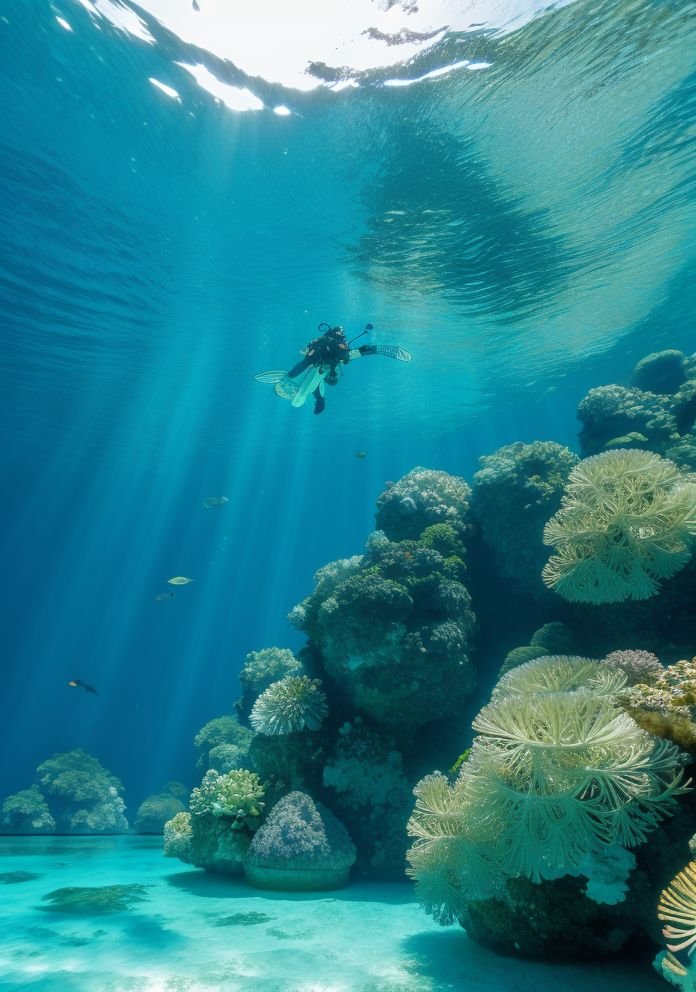
It’s the kind of underwater scene that makes you forget to check your dive computer for a second.
Tucked away off the coast of West Papua in far-eastern Indonesia, Raja Ampat (which means “The Four Kings”) covers thousands of scattered karst islands and quiet lagoons. Marine scientists generally agree that these waters host the most diverse marine life on the planet.
Yet, unlike so many famous diving spots around the world that have been worn down by overtourism, Raja Ampat still feels completely wild.
What 75% of the World’s Coral Species Looks Like
To get a sense of why divers get so quiet and starry-eyed when talking about this place, you just have to look at how healthy the water is.
In most popular diving regions, you spend your time hunting around for a single turtle or a quiet corner of living coral. Here, the life is almost overwhelming. Around 75% of all known coral species on Earth exist in this single archipelago.
On a routine morning drift dive, you might find yourself floating past:
- Giant Oceanic Mantas: Massive rays with 15-foot wingspans that hover effortlessly over cleaning stations while tiny cleaner wrasse pick at their gills.
- Walking Sharks: Harmless little bottom-dwelling epaulette sharks that literally use their fins to crawl across the seabed at night.
- Pygmy Seahorses: Creatures no bigger than a grain of rice, so perfectly matched to the pink sea fans they live on that your dive guide has to point right at them with a pointer stick before you even notice they’re alive.
From Heavy Currents to Quiet Lagoons
Because the archipelago covers such a massive stretch of ocean, the diving changes completely depending on where your boat drops anchor.
Up in the Dampier Strait, rich ocean currents sweep nutrient-heavy water through narrow channels. It makes for fast, exciting drift dives where you hook into the reef edge and watch massive schools of barracuda and blacktip reef sharks hunt in the current. One famous site here, Cape Kri, once set a record when a scientist counted over 300 different fish species on a single dive tank.
Further south in Misool, the landscape shifts. Here, turquoise lagoons are framed by steep, jagged limestone peaks. Underwater, you’ll find deep sea caves, swim-throughs, and soft coral gardens so dense you have to be extra careful with your fin kicks just to avoid touching anything.


Why the Reefs Are Still Alive
It’s fair to ask how a place this incredible hasn’t been ruined yet.
The main reason is that getting here is an absolute trek. There are no direct international flights to these islands. You usually have to take multiple domestic flights across Indonesia, land in the port city of Sorong, catch a ferry, and then board a wooden boat or head to an isolated eco-lodge. That journey alone filters out casual beach crowds.
More importantly, local Papuan communities took control of their own waters years ago. They established strict Marine Protected Areas and banned destructive commercial fishing. Instead of high-rise resorts or massive cruise ships, accommodation is mostly limited to small, locally-run wooden homestays and traditional wooden liveaboard boats that move quietly between the islands.
Is It Worth the Trip?
Raja Ampat isn’t an easy destination, and it certainly isn’t a cheap one. It takes days of travel, long boat rides, and a bit of planning to make it happen.
But for anyone who loves the ocean, it offers something that is getting harder to find anywhere else on Earth: a coral reef operating at full, unfiltered strength, looking exactly the way the ocean was supposed to look all along.