

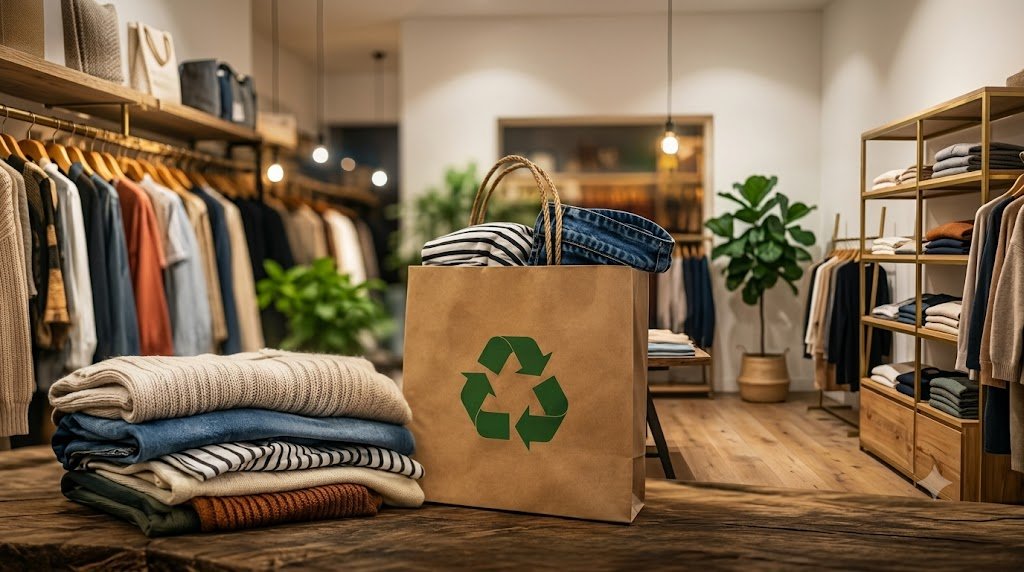
Walk into almost any fashion marketplace today and you will find two very different shopping habits sitting side by side. One is built around the excitement of something brand new. The other is about finding something that has already had a life — perhaps a vintage jacket, a barely worn designer bag or a pair of jeans that someone else has decided to let go.
The second-hand fashion market is growing fast, and the gap between resale and traditional clothing retail is becoming harder to ignore.
According to ThredUp’s 2026 Resale Report, the global second-hand apparel market is projected to reach $393 billion by 2030, representing roughly 10% of total apparel spending. More importantly, it is expected to grow twice as fast as the overall apparel market.
That is a significant shift. Second-hand fashion is no longer simply the cheaper alternative for shoppers on a budget. It is becoming part of mainstream fashion.
So, how much faster is second-hand growing?
The clearest numbers are coming from the United States. In 2025, the U.S. second-hand apparel market grew by 13%, while the broader retail clothing market grew at a much slower pace. ThredUp describes second-hand growth as roughly four times faster than broader retail clothing.
The trend was even more dramatic in 2024. The U.S. second-hand apparel market expanded by 14%, around five times the growth rate of the wider retail clothing market.
There is another number worth watching: the global second-hand apparel market is expected to reach $393 billion by 2030, compared with the $367 billion projection made for 2029 in the previous year’s report. That upward revision reflects just how quickly resale continues to expand.
Why are shoppers changing their habits?
Price is certainly part of the story. When new clothing becomes more expensive, second-hand suddenly looks much more attractive. A shopper can often find a higher-quality coat, designer piece or premium fabric at a fraction of its original price.
But affordability is only one reason.
Younger shoppers have also changed the way they think about ownership. Buying a piece second-hand and later reselling it creates a kind of fashion cycle: purchase, wear, sell, repeat. Clothing no longer has to be treated as something that stays in one wardrobe forever.
That behaviour is particularly important among Gen Z and Millennials. ThredUp expects these two generations to account for more than 70% of second-hand market growth through 2030.
Social media is helping, too. Vintage finds, thrift hauls, archive fashion and “designer for less” content have made second-hand shopping feel less like searching through an old charity shop and more like discovering something exclusive.
Resale is becoming a fashion strategy
Perhaps the biggest change is happening on the industry side.
Fashion brands increasingly understand that resale is not necessarily competition. It can become another way to keep customers connected to a brand.
Branded resale programmes, trade-in schemes and partnerships with resale platforms are becoming more common. A customer can buy an item, wear it for years and eventually return it to the resale ecosystem instead of simply throwing it away.
Technology is making that process easier. Better search tools, digital authentication, personalised recommendations and AI-assisted discovery are removing some of the frustrations traditionally associated with buying second-hand. ThredUp’s latest report identifies AI and easier digital discovery as important forces shaping the next stage of resale.
The bigger picture for fashion
There is still a long way to go before second-hand overtakes new clothing in absolute market size. That distinction matters. Second-hand fashion is growing faster, but new clothing remains the larger market.
What is changing is the balance of influence.
Consumers are becoming more comfortable mixing new purchases with pre-owned pieces. A vintage handbag can sit alongside a new-season dress. A second-hand leather jacket can become the statement piece of an otherwise inexpensive outfit.
That makes the future of fashion less about choosing between “new” and “used” and more about choosing what deserves to be bought new in the first place.
The numbers suggest that resale is not a temporary trend. It is becoming part of how the fashion economy works. And as second-hand fashion continues growing several times faster than traditional clothing retail in major markets, the question may soon shift from Who shops second-hand? to a much simpler one: Who doesn’t?