

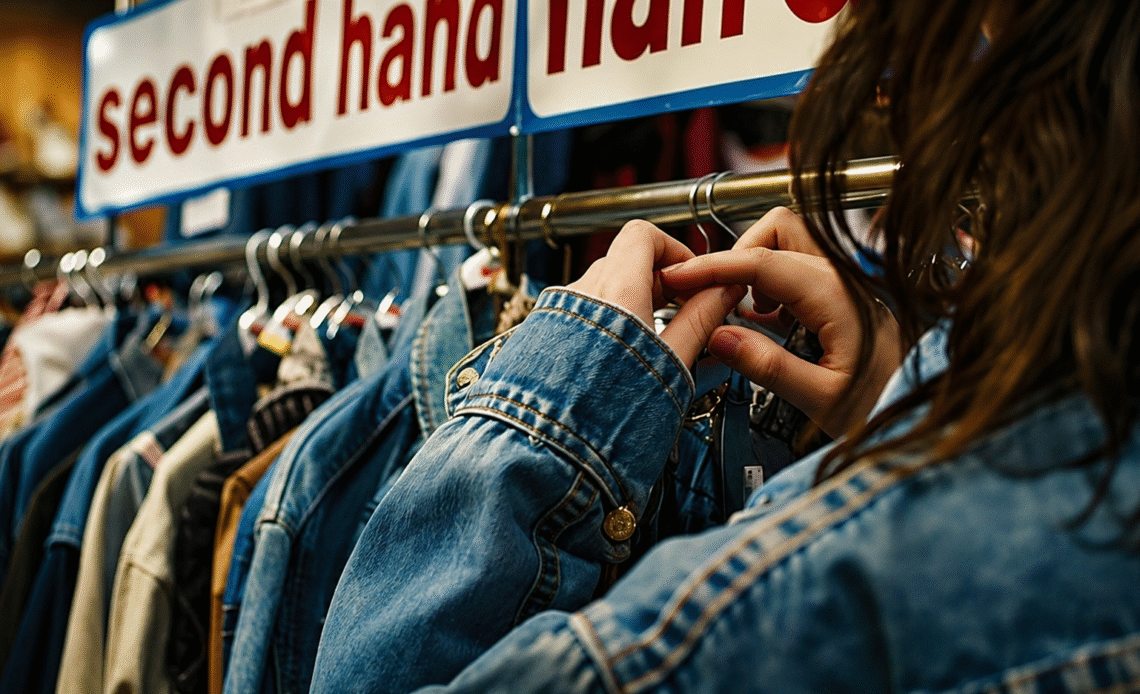
If you feel like everyone in your social feed is suddenly showing off vintage leather jackets, archival denim, or thrifted designer boots instead of brand-new fast fashion, you aren’t imagining things.
For decades, traditional retail operated on a simple, unbroken loop: brands designed clothing, factories produced it in massive volumes, and consumers bought it new. But over the last few years, a quiet revolution has been reshaping the global wardrobe.
Secondhand clothing is no longer just a niche subculture for weekend bargain hunters or college students. It has turned into a $393 billion powerhouse that is taking direct market share from standard retail stores.
So, by how much exactly is secondhand outgrowing traditional new clothing? The short answer: globally, resale is growing twice as fast as traditional retail—and in markets like the United States, it’s expanding nearly four times as fast.
Here is a closer look at what the numbers actually say and why this massive cultural shift is happening right now.
The Numbers Behind the Resale Boom
According to the latest industry data from GlobalData and ThredUp, the secondhand market currently represents roughly 10% of all global apparel spending. While that might sound modest at first glance, the growth trajectory tells a dramatic story.
While traditional retail clothing sales struggle along at modest annual growth rates around 3% to 3.5%, the global resale sector is surging forward at a compound annual rate of around 9% to 10%. In fact, nearly 60% of consumers report buying secondhand apparel over the past year—a dramatic jump from just a few years ago.
Through 2030, analysts project that more than 70% of all growth in the fashion sector will be driven by Gen Z and Millennial shoppers, who are fundamentally rethinking what it means to “own” clothes. For these generations, buying used isn’t a compromise—it’s the default starting point.
Why the Paradigm Shift Is Happening Now
This isn’t just about environmental goodwill. While sustainability plays a key role, several pragmatic, everyday forces are driving people away from buying brand-new items:
- Stretched Budgets and Inflation: Persistent economic cost pressures have pushed thrifting from an optional hobby into a practical lifestyle strategy. Over 70% of shoppers say rising prices directly impact their clothing budgets, and buying pre-owned lets people stretch their dollar while getting higher quality garments than fast-fashion alternatives.
- The Decline of New Garment Quality: A major complaint among shoppers today is that brand-new fast fashion feels thinner, cheaper, and flimsier than ever. A pair of 15-year-old secondhand denim jeans often outlasts a brand-new $60 pair bought off a mall rack today.
- Tech and AI Eliminating Friction: Thrifting used to require hours of digging through dusty racks in crowded thrift stores. Today, AI-powered discovery feeds, automated visual searches, and seamless resale apps like Depop, Poshmark, and Vinted make finding your exact size in a specific secondhand jacket as fast as ordering on Amazon.
Closets as Assets, Not Expense Accounts
Perhaps the most fascinating change is how younger buyers view their wardrobes.
Rather than treating clothing purchases as sunk costs, Gen Z and Millennials treat their closets like revolving assets. More than half of younger consumers report attempting to resell items from their wardrobes, using peer-to-peer platforms to fund future purchases or generate extra income.
When consumers buy a coat or a dress today, a growing percentage actively consider its future resale value before making a decision. If a brand holds its value on the secondary market, shoppers are far more willing to invest in it.
What This Means for the Future of Retail
Traditional fashion brands can no longer afford to ignore what happens after a garment leaves their cash registers. Major retailers are rushing to launch their own branded trade-in and resale channels because they know that if they don’t capture that secondary transaction, someone else will.
Secondhand fashion has crossed the threshold from a quirky alternative to a dominant driver of global commerce. As consumer habits continue to prioritize quality, affordability, and circularity over cheap mass production, one thing is clear: the future of fashion isn’t coming off a factory line—it’s already hanging in someone else’s closet.