

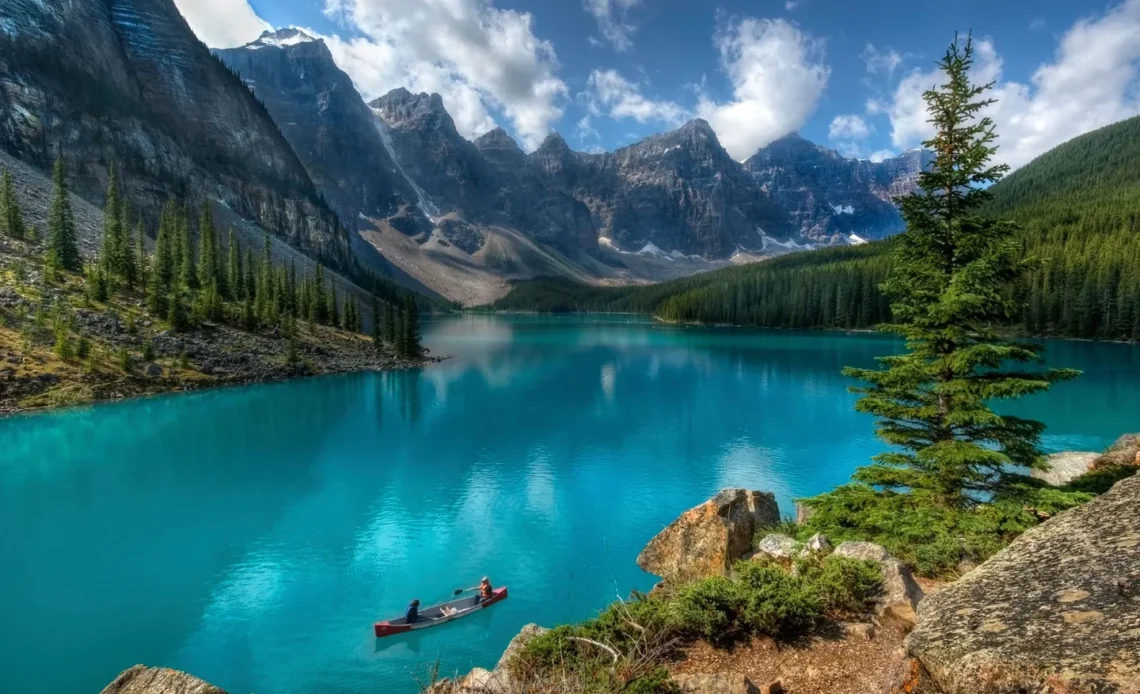
There are places that make you feel small in the best possible way — places where the scale of nature humbles you, and its beauty fills every corner of your soul. Banff National Park, tucked within the majestic Canadian Rockies of Alberta, is one such wonder. It’s a place where turquoise lakes mirror snow-capped peaks, pine forests whisper with wind, and adventure flows as freely as the rivers that carve through its valleys.
My first glimpse of Banff came through the window of a mountain train, as the early morning light bathed the peaks in gold. The crisp alpine air, scented with pine and glacier melt, instantly revived me. The park, established in 1885, is Canada’s oldest — a wilderness sanctuary that feels both untamed and deeply welcoming.
I began my journey in the town of Banff, a charming mountain village nestled at the foot of Mount Rundle. Quaint streets lined with cafés, outdoor shops, and cozy lodges give it a warm, alpine character. Despite its popularity, Banff retains an intimate connection to the wilderness — it’s not unusual to see elk wandering near the river at dawn. After a hearty breakfast of pancakes with local maple syrup, I set out for the day’s first adventure.
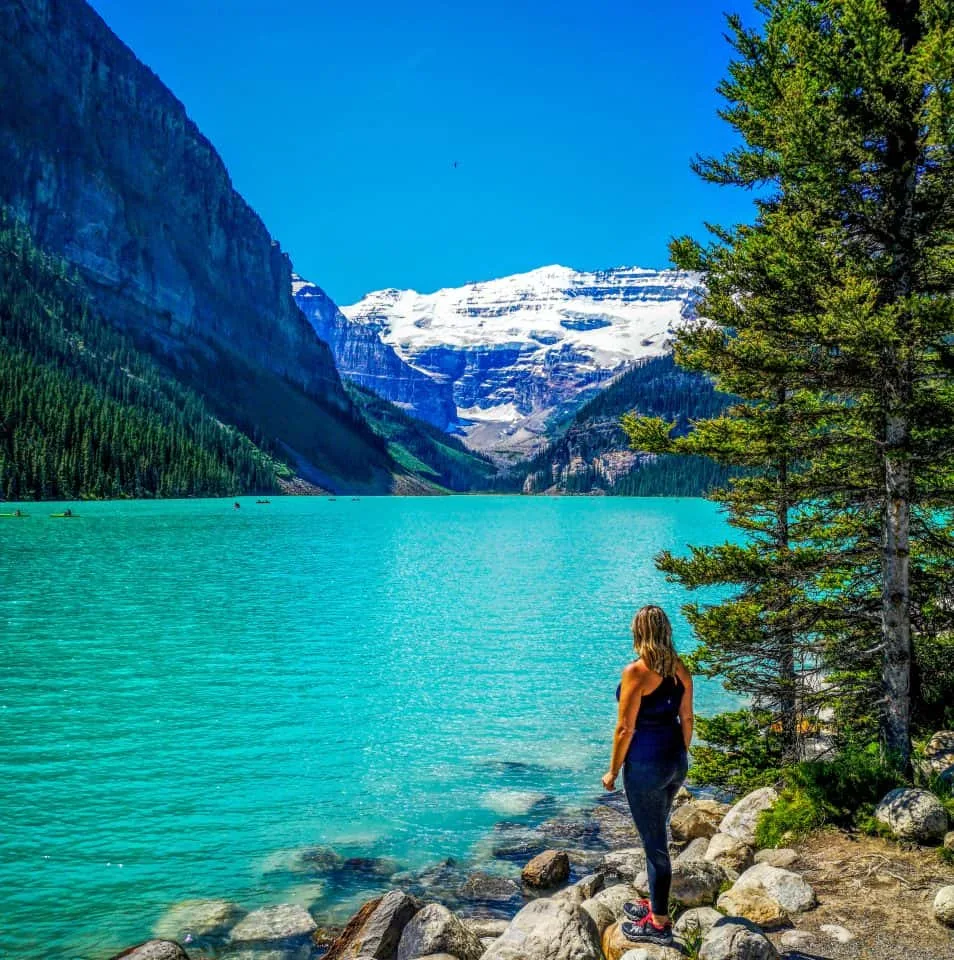
Just an hour away, the world-famous Lake Louise awaited — a sight so stunning it seems almost unreal. The lake’s turquoise hue, created by glacial rock flour suspended in the water, glows like a gemstone under the mountain sun. Surrounding peaks rise dramatically on all sides, their reflections shimmering on the surface. I rented a bright red canoe and paddled into the middle of the lake, the sound of my oar the only ripple in the stillness. It was one of those moments where silence becomes a language of its own — the language of awe.
From Lake Louise, I followed the Icefields Parkway, often described as one of the most scenic drives in the world. The road winds through valleys carved by glaciers, past waterfalls, alpine meadows, and crystal-clear rivers. I stopped at Peyto Lake, shaped like a wolf’s head when seen from above, and later at the Columbia Icefield, where ancient ice still creaks beneath the weight of time. Walking on a glacier is an almost spiritual experience — each step a reminder of the planet’s power and fragility.
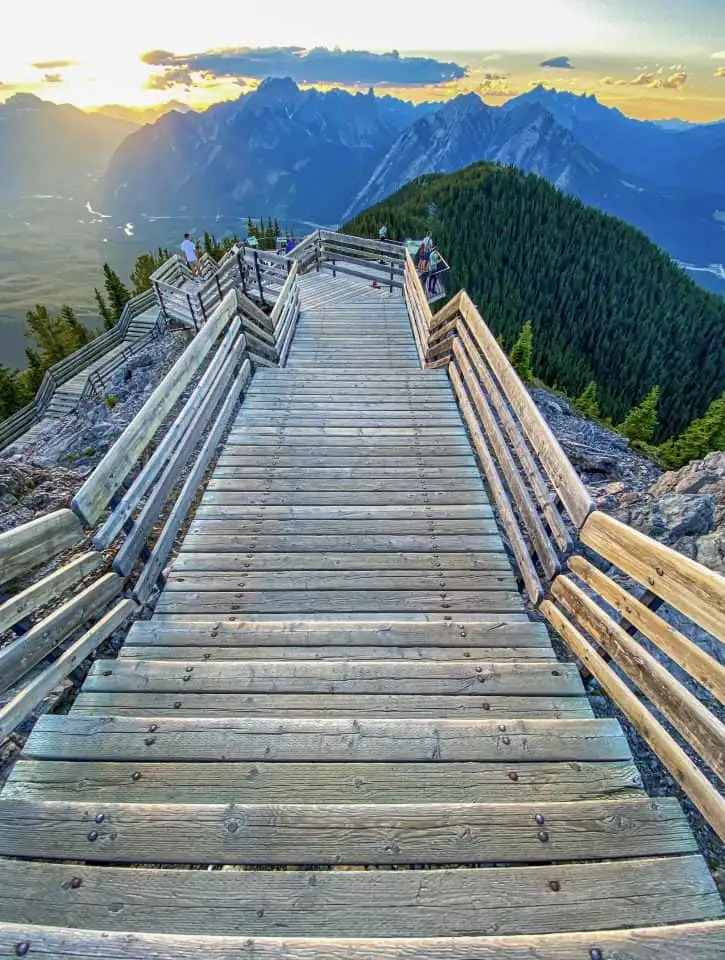
Adventure seekers will find no shortage of thrills here. In summer, Banff’s trails invite hikers and bikers to explore endless ridgelines and forests. In winter, the park transforms into a snowy playground for skiers and snowboarders. I took the Banff Gondola up Sulphur Mountain for a panoramic view of six mountain ranges — a vista so vast it made me feel like I was standing at the top of the world.
Yet, Banff’s beauty isn’t just about its grandeur; it’s about its quiet moments too. The soft rustle of aspens near Vermilion Lakes, the reflection of twilight on Two Jack Lake, or the comforting crackle of a campfire under a starlit sky. These are the moments that linger long after you’ve left.
That evening, I soaked in the historic Banff Upper Hot Springs, where travelers have bathed for over a century. The natural warmth of the mineral water against the chill of mountain air felt healing — a perfect way to end a day of exploration. Later, over a dinner of locally caught trout and Alberta beef, I thought about how effortlessly Banff balances adventure and serenity. It’s wild yet welcoming, vast yet personal — a place that awakens both your sense of wonder and your sense of peace.
Before leaving, I rose early to watch the sunrise from Moraine Lake. As the first light hit the Ten Peaks, the water blazed with color — turquoise, gold, and sapphire all at once. Standing there, wrapped in silence and beauty, I understood why Banff is called the crown jewel of the Rockies. It’s not just for its breathtaking landscapes, but for how it reminds you that the world is still full of pure, untamed magic.
Banff doesn’t just capture your eyes; it captures your heart — quietly, completely, and forever.