

When we think of the “wonders of the ancient world,” most of us immediately picture the Great Pyramid of Giza or the Hanging Gardens of Babylon. But the ancient world was far larger, more complex, and more inventive than the seven iconic wonders usually listed. From forgotten empires to remote desert kingdoms, many extraordinary constructions once shaped human imagination—only to slip quietly into obscurity.
Today, we journey through five lesser-known wonders of the ancient world, each one offering a breathtaking glimpse into civilizations that left behind masterpieces far grander than their fame.
1. The Longmen Grottoes – China’s Stone Library of Souls
Set along the banks of the Yi River in Henan, the Longmen Grottoes form one of the world’s most astonishing collections of stone-carved art. Over 100,000 statues—some as small as a thumbnail, others towering over 50 feet high—are carved into limestone cliffs that stretch for a kilometer.
What makes Longmen such a wonder isn’t just its magnitude but its emotional depth. These were not carved for spectacle; they were carved as devotional acts, each a small expression of faith. Walking through the grottoes today feels like entering a stone cathedral where every wall, niche, and crevice hums with centuries of whispered prayers.
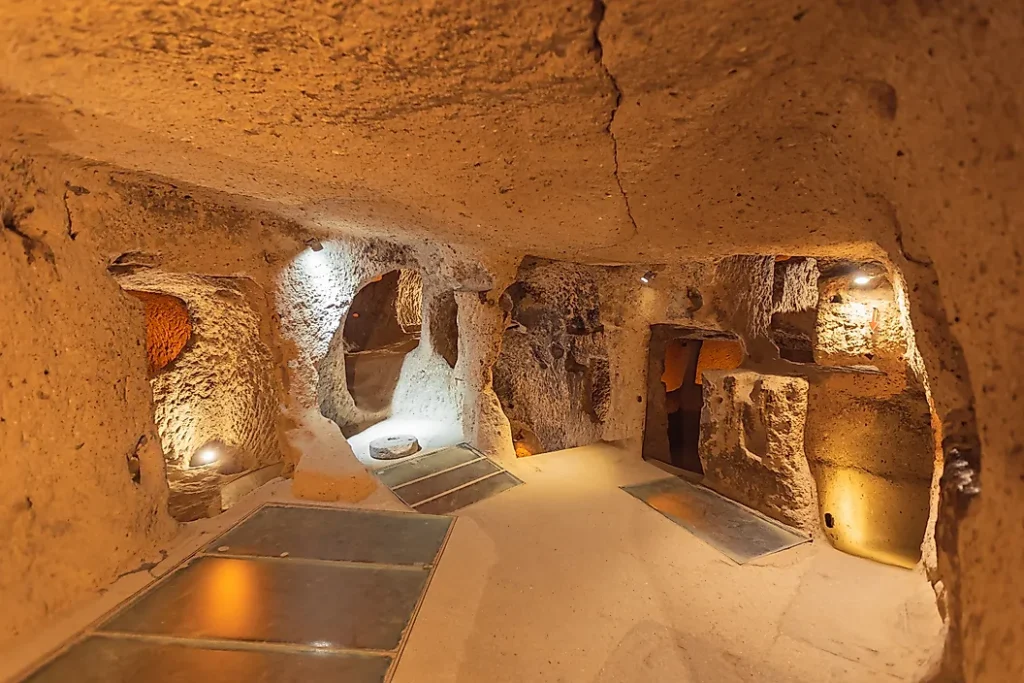
The precision of the carvings, the spiritual serenity in the Buddha faces, and the sheer scale of human labor involved elevate this site to a wonder that deserves a spotlight equal to any classical ruins.
2. The Tomb of Antiochus I at Mount Nemrut – A Throne Above the Clouds
High in the mountains of southeastern Türkiye lies Mount Nemrut, home to the monumental tomb-sanctuary of King Antiochus I of Commagene. Giant stone heads—representing Greek, Armenian, and Persian deities—are scattered across the terrace like mythological relics dropped from the sky.
This mountaintop wonder stands nearly 7,000 feet above sea level, and reaching it feels like ascending into a realm between the mortal world and the divine. Antiochus envisioned his tomb as a place where Eastern and Western gods could coexist, a political and spiritual statement carved in stone.
Sunrises here are legendary; as dawn breaks, the stone faces glow gold and amber, making the entire mountain feel alive. The engineering required to transport and assemble these enormous statues on such rugged terrain remains an unanswered marvel.
3. The Hypogeum of Ħal Saflieni – Malta’s Subterranean Masterpiece
Long before the Egyptians built pyramids, the people of Malta created one of the world’s most intricate underground temples: the Hypogeum of Ħal Saflieni. Carved entirely by hand around 4000 BCE, this subterranean wonder stretches across three levels of chambers connected by tunnels and carved doorways.
Here, nature and architecture coexist in a way rarely seen. Smooth red ochre spirals decorate the walls, echoing artistic instincts older than most writing systems. The acoustics are extraordinary—sounds made in one chamber reverberate through the others.
This was not merely a burial site; it was a spiritual labyrinth, a ceremonial space where echoes played as much a role as stone. The Hypogeum remains one of humanity’s earliest examples of architectural acoustics, and its state of preservation is nothing short of miraculous.
4. The Musawwarat es-Sufra Complex – Sudan’s Lost Desert Metropolis
Hidden deep within the Sudanese desert lies Musawwarat es-Sufra, a sprawling temple complex of the ancient Kingdom of Kush. Far from any major settlement, this site surprises visitors with its vast labyrinthine design—courtyards, ramps, temples, workshops, and ceremonial avenues all interconnected like a sacred city.
The most mysterious structure is the Great Enclosure, whose function remains a puzzle. Some scholars think it was a pilgrimage center; others believe it housed ritual elephant training—a theory supported by carvings of elephants on the walls.
What makes Musawwarat a wonder is not only its isolation but its scale and sophistication. The complex reflects a civilization with engineering expertise equal to Egypt’s but with an artistic identity entirely its own—bold, intricate, and deeply symbolic.
5. The Nan Madol Ruins – The Venice of the Pacific
Scattered across a grid of artificial islets off the coast of Pohnpei in Micronesia lies Nan Madol, one of the world’s most enigmatic ancient cities. Built atop coral foundations and linked by a network of tidal canals, Nan Madol is often called the “Venice of the Pacific”—but its mysteries stretch far deeper.
Its basalt pillars, stacked like enormous logs, weigh several tons each and were somehow transported across open ocean with no known machinery. The city was built as the ceremonial and political center of the Saudeleur dynasty, complete with tombs, temples, and residential compounds that seem to float above the sea.
Nan Madol stands as a testament to human ingenuity in a remote corner of the world, proving that even isolated island cultures created architectural wonders on par with much larger empires.
Why These Hidden Wonders Still Matter
What connects these lesser-known wonders is not fame or grandiosity—but human imagination expressed through stone, water, mountains, and faith. They remind us that history is not a single narrative carved by a few great empires. It is a vast tapestry of civilizations, each leaving behind marvels waiting to be rediscovered.